




Copyright Protected Website 2026 -

“Every question is a doorway. Here, we explore belief, truth, and understanding beyond the surface.”
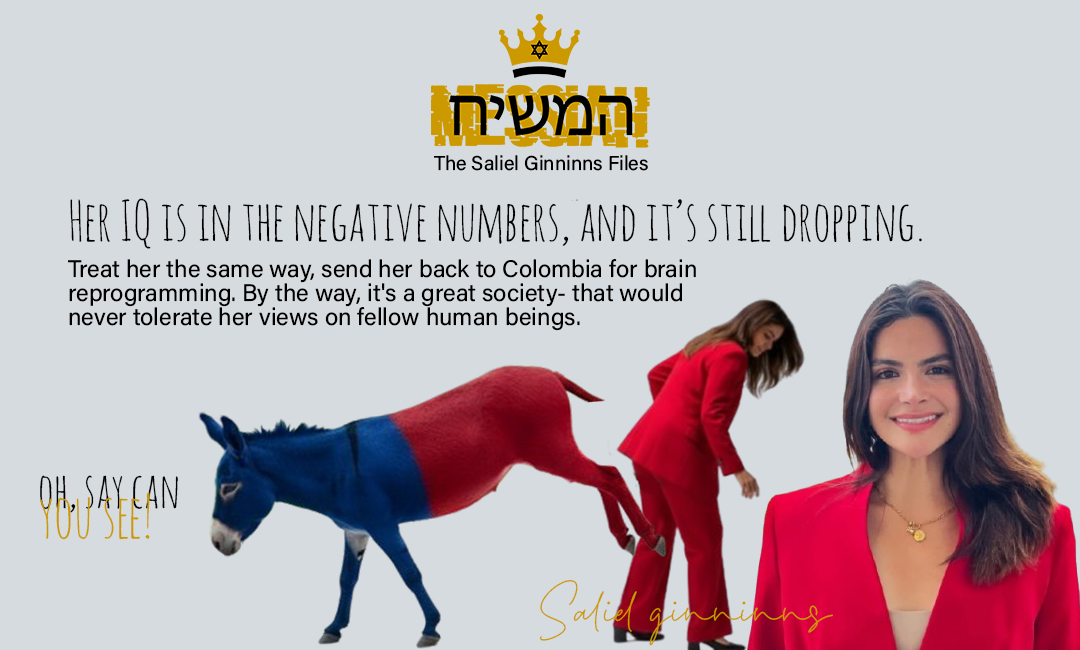
Valentina Gomez, Her IQ is lower than the room temperature
A few days ago, I watched a brief interview on social media with the TV personality Piers Morgan, and the two guests Valentina Gomez and Omar Baddar. In this interview, the incompetent and shameful politician in question commits a serious and egregious form of hate speech by referring to a minority group as "dirty," while simultaneously attempting to suggest, in one way or another, that they are rapists and pedophiles.
I strongly believe the political party must immediately express a vote of no confidence in this politician (Valentina Gomez), who should be removed from all political duties and held accountable under both U.S. and international laws related to incitement of hate against specific groups.
This constitutes an extremely serious and dangerous trend that is spreading globally, including here in Sweden. A prime example can be seen in certain right-
Furthermore, I strongly believe that the American president Donald Trump must reconsider his rhetoric and policy, as he was the one who initiated this trend. He must not forget that the group of people in question invested nearly 5 TRILLION DOLLARS into his economic policies. Yet, as a response, he and his colleagues repeatedly refer to these individuals as "dirty" both day and night.
This is the core issue with modern democracy: far too many individuals are entering politics overnight, lacking the necessary competence and experience in political leadership. They have no understanding of diplomacy or the long-
Another alarming trend is that in order to gain fame or substantial media exposure today, the first step many takes is to attack refugees, immigrants, or other vulnerable minorities such as Muslims. To gain attention, some individuals target these groups, their prophet, or their religious texts. This trend must be stopped immediately.



View The Picture
Welcome to our blog, a platform dedicated to reflection, knowledge, insight, and open dialogue about some of the most important and complex subjects affecting humanity and society. This space has been created to explore fundamental questions about life, belief, health, relationships, and the world we live in, through thoughtful writing, analysis, and critical perspectives.
The blog covers a broad range of topics, including God, faith, religions, prophets, prophecy, and spiritual traditions, as well as sex and cohabitation, love, relationships, family life, medicine, health, and overall well-
On this page, each blog post is presented with a summary or brief excerpt to provide an overview of the content. If you wish to read the full article, you can do so by clicking the button located beneath the summary. This structure allows readers to easily navigate the content and choose the topics that interest them most.
All published content may be read, printed, shared, or republished for personal or informational purposes. However, the content must not be altered, edited, or modified in any way. When sharing or publishing, the original meaning, wording, and context must be preserved, and appropriate credit should be given to the source.
This blog exists to contribute to awareness, dialogue, and deeper understanding in a complex and changing world. Through respectful exploration of sensitive, controversial, and meaningful subjects, we aim to support personal growth, critical thinking, and a broader perspective on life and society.
Dumpen.se/the perpetrator -
In Sweden, a website has established itself as a platform where private individuals act without any form of legal authority. The website aims to capture and manipulate men who are interested in purchasing sexual services. By seducing these individuals and then threatening them with revealing their personal information and sexual behaviors, both blackmail and defamation are practiced. This is a serious violation of both national and international laws, and its consequences extend far beyond the individuals directly affected.
Read More Here

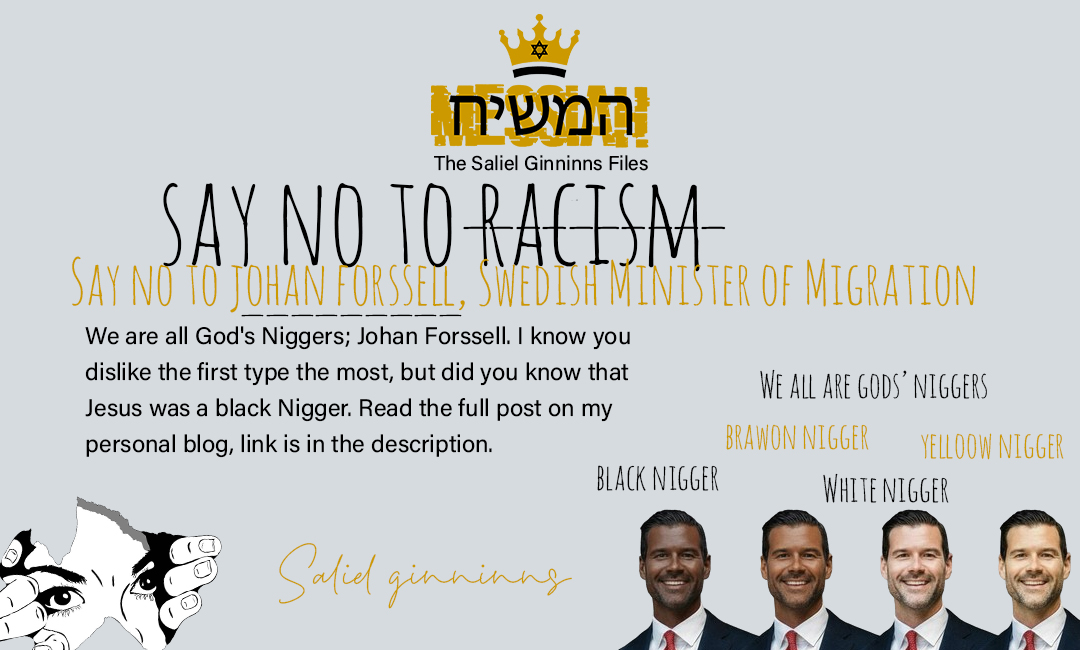
Johan Forssell, Swedish Migration Minister
Sweden is now facing a major dilemma. The government and its ministers have come under serious criticism, not only for their political decisions but also for their personal views and actions. Johan Forssell’s continued service as Minister of Migration is a signal of weakness in leadership, and his actions undermine the policies that Sweden is trying to pursue on the international level.
Read More Here
Journalism must inform the public, not serve political agendas. RIKS IS A RISK!
I have submitted a formal complaint to the Swedish Media Ombudsman and the Ethical Press Committee (YEN) regarding a media outlet (RIKS) owned by a political party. The complaint concerns serious shortcomings in journalistic quality, professional ethics, and editorial standards. It also addresses the blurred line between journalism and political advocacy, as well as content that, in my assessment, risks misrepresentation and, in some cases, incitement against protected groups.
The purpose of this complaint is not to restrict freedom of expression, but to uphold responsible, transparent, and ethical journalism. In a democratic society, media must meet high professional standards regardless of political affiliation. I encourage others to engage in the discussion about media accountability, ethics, and the quality of public discourse.
Read More Here

When Legislation Reveals the Weakness of Leadership
Before I address the main topic, I want to share a thought I often return to:
if you want to understand how incompetent a politician or leader truly is, take a close look at their legislative proposals.
On October 30, 2025, the Swedish liberals and their party presented a legislative proposal to ban strangulation Sex or bdsm. From the outset, the proposal raises serious concerns about leadership capacity and overall understanding of society.
The proposal reflects a clear lack of political competence and responsibility. It suggests that the complexity of the issue has not been properly understood, nor have the broader societal consequences been taken into account. Most notably, it appears that no thorough investigation or impact assessment was conducted prior to presenting the proposal. There is no indication that the party examined how many of its own citizens are affected—whether through sexual orientation or personal sexual preferences—or how such legislation would directly interfere with and violate people’s private lives.
When politicians begin issuing orders about what consenting adults may or may not do in their bedrooms, a critical boundary has been crossed. To me, that is a clear sign that political power has overreached.
If new laws are to be introduced, they must be laws that the general public can realistically follow. More importantly, they must serve a clear purpose: to protect citizens and provide genuine benefit to society. Laws driven by symbolism or moral posturing do not create safety or order—they create division.
I have also reviewed the arguments presented in support of this proposal. Unfortunately, they were weak, poorly reasoned, and lacked intellectual substance. The reasoning gave the impression of being driven more by ideology, emotional reaction, or a desire for media attention than by facts, legal principles, or a grounded understanding of reality.
It is also important to place this discussion within a broader human and historical context. Humanity has always violated both religious and moral laws. It is part of our nature to fall short—especially when desire, temptation, and imperfection are inherent to our existence. Religious tradition speaks of souls that are never fully satisfied and of forces that tempt and mislead. Yet the best among us are those who reflect, return to God, and ask for forgiveness.
God said: do not go near the tree—and we went near the tree and ate from it.
God said: no sex before marriage—yet the majority have sex before marriage.
God said: no sex outside of marriage—yet it remains widespread.
God said: no adultery—yet we live in a society where infidelity is common.
If people do not even follow God’s laws, how realistic is it to expect them to follow deeply intrusive state laws governing private behavior?
Laws concerning sex, sexual orientation, and sexual fetishes are among the most sensitive areas of legislation. They require extreme caution, humility, and respect. A responsible politician should strive to protect human dignity—not undermine it.
Listen to Podcast



“The deceitful shall not dwell in God’s house, and the one who speaks falsehood shall not stand in His presence.”
There are moments when political responsibility can no longer be postponed. In this case, I firmly believe that two prominent politicians should immediately resign from their positions—or, if necessary, face a vote of no confidence in parliament.
The criticism directed at them is not limited to political decisions or ideological positions. It also concerns their conduct, their priorities, and their relationships with external interests. When elected officials repeatedly act in ways that appear to benefit lobbyists rather than citizens, serious questions arise regarding integrity, accountability, and loyalty.
Sweden deserves politicians who serve the people—not themselves, not hidden interests, and not financial or ideological pressure from behind the scenes. When public trust has been exhausted, only one option remains: to step aside.
In light of this, I believe these two politicians no longer possess the trust required to continue in their roles. They have failed to deliver meaningful benefit to society over the past four years, and their conduct suggests that they serve personal interests rather than the public good.
For these reasons, they should step down immediately. Should they refuse to do so, parliament must consider holding them accountable through a vote of no confidence.
Listen to Podcast

Is the American President, Donald Trump, a Dictator? On Power, Language, Democracy, and Political Misconceptions.
I was recently asked a question that frequently arises in today’s polarized political climate: Is the president of United states of America, Donald Trump, a dictator?
It is a legitimate question—but one that requires a nuanced and historically informed answer. In this recording, I do not simply respond with a yes or no. Instead, I take the opportunity to explain what the term dictator actually means, where it originates from, and why it is so often misunderstood or automatically perceived as negative in modern discourse.
In the recording, I also address democracy itself. Democracy, as commonly understood today, has evolved significantly since its origins in France after the French revolution. Modern democracy is not a finished system but an ongoing experiment—one that in many cases struggles with declining public trust, elite dominance, lobbyism and limited genuine participation by citizens.
For this reason, I’m introducing a new and improved form of democracy in the State of Israel. Democracy 2.0, which can be copied in the rest of the world if desired.
Listen to Podcast

When royalty imitates Hollywood and fiction, tradition becomes a costume rather than a responsibility. What has surfaced so far may only be the beginning.
Recent leaks surrounding Sofia Hellqvist and Jeffrey Epstein have sparked growing attention in Sweden, and denying their existence may prove to be a mistake. According to sources, more disclosures are on the way — and they are expected to provide clear evidence of Sofia Hellqvist’s involvement in private parties and undisclosed social settings.
At the same time, Sofia Hellqvist is far from without history herself. Reports point to past involvement in similar events, open relationships, reality television, and other controversial contexts. Adding to the situation, another individual within the Bernadotte family may also be affected by upcoming revelations. This person is said to have lived with considerable concern for some time that sensitive information could be exposed to the public — a possibility that now appears increasingly likely.
The situation continues to evolve, and there are strong indications that further disclosures may significantly alter both the narrative and the public standing of those involved.
Another point worth mentioning is how today’s so-
According to established royal guidelines and accepted protocol, no individual may be arbitrarily granted the title of Prince or Princess. Such titles are conferred by birth and require that at least one parent holds royal status, such as Prince, Princess, King, Queen, Emperor, or Empress.
The same principles apply to the title of Queen. Only an individual who holds the title of Princess may be elevated to Queen. The title of Queen is regarded as a first-
Within the family in question, several individuals have been granted royal titles in a manner that does not conform to these established principles. Such titles have therefore been conferred on improper grounds and should, where any title is to be retained at all, be downgraded to a third-
View The Picture
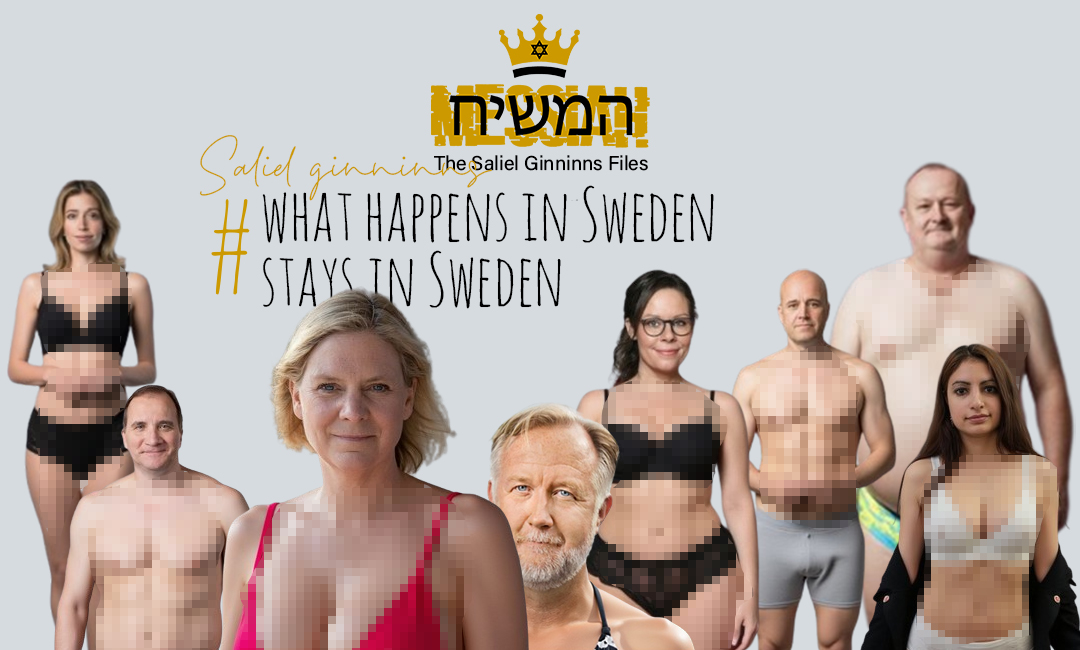
When Politicians Sell Surveillance — and Call It Safety.
I am honestly exhausted by the constant stream of reckless and poorly thought-
We are talking about proposals such as:
1. Mandatory ID requirements for all social media platforms
2. Real-
3. A massive expansion of surveillance cameras
4. Data retention and access to encrypted messages and SMS
Each of these proposals is dangerous on its own. Taken together, they form a system that has no place in a democratic society.
What is most alarming is that many politicians seem completely unaware that the very same technologies are already being used—against them and their families. Do you really believe you are exempt? Do you understand how many intelligence agencies, criminal networks, private actors, and foreign interests are already monitoring you? How many extensive files exist about your lives, your habits, your relationships, and your vulnerabilities?
I have said this before in my recordings and videos, and I will say it again: If you want to know how incompetent a politician is, look at their legislative proposals.
In their rush to appear decisive, they have shot themselves in the foot—while selling out the public. In many cases, they have effectively stabbed the people in the back.
An even bigger problem is that privacy no longer truly exists in Sweden. Personal integrity has been reduced to a hollow concept used in speeches. Almost all information about ordinary citizens is public under the principle of public access, while many politicians’ own details are protected or conveniently withheld.
At the same time, corporations are making billions by collecting, packaging, and selling the personal data of Swedish citizens. This goes far beyond names and addresses. It includes:
phone numbers
homes and private property
partners and family connections
criminal records and legal histories
browsing habits and digital behavior
All of this information is readily available, commodified, and for sale.
And yet, in the middle of this reality, politicians continue to push for more surveillance, more data collection, and fewer freedoms—without understanding that the system is already deeply unbalanced. They are not protecting citizens. They are exposing them.
The question is no longer how much safer these proposals will make us.The real question is: how much freedom are politicians willing to sacrifice before they realize that they themselves are the next target?
Listen to Podcast
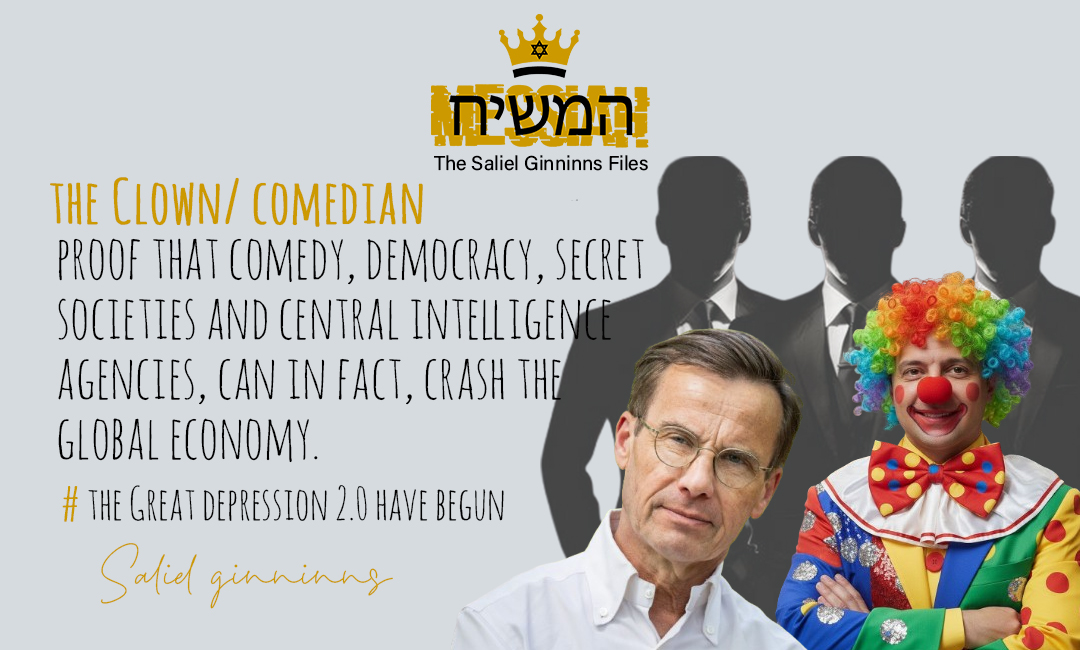
“Ladies and gentlemen, meet the Clown. Credentials include poor decisions and a minor contribution to the collapse of the world economy.”
Many years ago, I used a concept I called the middle child syndrome. It is a simple but powerful metaphor.
Imagine a family with three children. The youngest is three years old—small, adorable, and in constant need of care. The oldest is fifteen, in the middle of adolescence, rebellious, pushing boundaries, and demanding a great deal of attention. Between them stands the eleven-
The consequences are well known. Middle children are frequently overrepresented in statistics related to depression, loneliness, and, in the worst cases, suicide. Not because they have it easier—but because they are not truly seen.
This pattern does not apply only to families. It applies to societies as well.
When Leaders Fall into the Middle Child Syndrome, Those Who Suffer the Most Are Forgotten
Politicians and leaders can also fall victim to a form of middle child syndrome. When all attention, resources, and political energy are directed toward one or two groups, a large portion of the population is left behind—despite suffering quietly.
We see this clearly in Europe today.
You Ulf Kristersson, together with other EU leaders, have devoted immense focus to the war in Ukraine and the Ukrainian people. To date, this war has cost the world nearly ten trillion US dollars. Vast quantities of weapons, supplies, and financial aid have been sent. Millions of refugees have been received—an undeniable humanitarian responsibility, but also an enormous economic burden.
Taxpayers continue to fund healthcare, housing, education, social support, and many other services. Only days ago, you and other EU leaders approved yet another massive loan, nearly 80 billion euros.
My question is straightforward:
When will you begin to focus on your own people, the Forgotten Within Our Own Borders?
While attention remains fixed beyond national borders, people at home are suffering in silence. Pensioners are struggling to make ends meet. Single parents cannot afford to feed their children. Families are falling into debt simply to survive.
Bankruptcies are increasing. Unemployment is rising. Poverty in Sweden is growing. Homelessness is becoming more widespread.
So I ask again, in simpler terms:
Why are you feeding your neighbor’s children while neglecting your own?
I have previously spoken about a global economic crisis that began on 25th of September 2025, largely as a consequence of the war and the conflict surrounding it. These warnings were not taken seriously. Now, reality is beginning to catch up.
This war lies behind—or has significantly worsened—many of the conflicts and crises we see in the world today: economic, social, and political. Sooner or later, even those who choose to look away will be forced to wake up.
Letting go does not mean you stopped caring, it means you have tried enough and now you need to focus on your own citizens
Furthermore, I believe your close relationship with Vladimir Zelenskyhas gone too far. His repeated visits to Sweden are, in my view, unnecessary and costly for Swedish taxpayers.
I do not see him as a serious leader or statesman. At his core, he is a former entertainer—a clown and comedian by profession, which in itself is not a crime. However, his background and conduct make it difficult to view him as a credible political leader. His public behavior has often lacked dignity, and his image as an anti-
Connections to corruption scandals, including revelations such as the Pandora Papers, as well as questions surrounding his family’s business interests, raise serious concerns. Yet he became president of a large nation—one that is now deeply damaged.
I struggle to decide what is more troubling: the democratic process that allowed this to happen, or those who actively placed him in power.
There is a saying: Tell me who you surround yourself with, and I will tell you who you are. When European leaders sit in the same rooms, laugh, and make decisions alongside a former clown and comedian, it is difficult not to question what that says about them.
View The Picture

The Gold Dispute – When Justice Falters Under Media Pressure
The so-
Judicial Responsibility and Lack of Independence
In this case, the judges appear to have attempted to satisfy all parties rather than strictly adhering to the law, the evidence, and fundamental principles of justice. This approach is deeply problematic. A judge’s role is not to craft compromises that appear socially or politically convenient, but to deliver impartial and legally sound judgments.
Judges carry a profound responsibility toward society. They must remain transparent, independent, and immune to influence from media, politicians, or public opinion. When these principles are compromised, the legitimacy of the judgment collapses. In this case, the error is so serious that the ruling should be declared invalid and the matter retried.
“According to God’s laws on the Day of Judgment, there are two types of judges: those who enter Hell immediately, and those who will themselves be judged—judged in the same manner as they judged others on Earth.”
The message is timeless: those who judge others will ultimately be held accountable for the fairness and integrity of their judgments.
Background of the Gold Discovery
The background of the dispute is as follows:
During renovation work on a recently purchased house, craftsmen discovered approximately 5 kilograms of gold and 2 kilograms of platinum, with an estimated value of around 15 million SEK. The valuables were concealed within the property.
Three parties claim ownership of the discovery:
1. The seller (or the seller’s estate)
2. The buyer of the property
3. The craftsmen who discovered the valuables
Each party asserts a legitimate claim, making the case both legally and morally complex.
God’s Judgment
According to God’s laws and principles of justice, the outcome should be as follows:
If the seller can prove that the gold is an inheritance from their parents, the seller (or the estate) should retain 75% of the find.
20% should be awarded to the craftsmen as a finder’s fee.
5% should be paid to the state to cover administrative costs.
If the seller cannot prove that the gold was inherited and rightfully belonged to the parents, ownership should pass to the buyer of the house.
The buyer retains 75%.
The craftsmen receive 20% as a finder’s fee.
5% is allocated to the state for administrative and legal costs.
The Principle of Finder’s Fee
Under God’s laws, anyone who finds lost property is entitled to a 20% finder’s fee based on its value. If the item is handed over to the police or a comparable authority, the authority may charge a 5% administrative fee.
For example, if someone finds a wallet containing 2,000 SEK and chooses to contact the owner directly using information found in the wallet, they are entitled to claim a 20% finder’s fee. Those who choose not to claim a fee still perform a good deed and, according to belief, will be rewarded by God. There is no blame in claiming a finder’s fee—the good act lies in returning property rather than keeping what does not belong to you.
If property valued above, for example, 1,000 SEK is handed over to the police and no owner comes forward within 90 days, the finder has the right to keep the item while paying 5% of its value as an administrative fee to the authorities.
Final Remarks and Recommendations
In conclusion, the settlement approved by the district court must be declared invalid. If the estate can prove that the discovery belonged to the deceased, the distribution should be as follows:
75% to the estate, 20% to the craftsmen, and 5% to the state.
I strongly recommend that all found property be handed over to the police and that a receipt be requested. Authorities have a duty to assist the finder in securing their lawful finder’s fee before the property is returned to its rightful owner.
One final and important recommendation:
Before handing over found property to the authorities, photograph the items, document serial numbers, and record all identifiable details. There have been previous cases where found property disappeared or information was misused. Proper documentation protects your rights and ensures accountability.
Justice requires courage, transparency, and responsibility—especially from those entrusted with the power to judge.
View The Picture

On the Use of Provocative Metaphor as Moral and Social Critique
I am occasionally asked to clarify a metaphorical term that I use frequently in my speeches, recordings, and public commentary—namely expressions such as “he or she is a cock-
First and foremost, the expression is not literal, nor is it intended as vulgarity for its own sake. It is a deliberately confrontational moral metaphor, employed to express profound criticism and disappointment toward a particular type of human behavior—one that is far more widespread, normalized, and socially rewarded than many are willing to admit.
The Behavior the Metaphor Describes
The metaphor refers to an individual who has sold themselves—not merely in an economic sense, but in a moral, psychological, and existential one. It describes a person who acts as a sycophant: someone who flatters, obeys, and submits to those in positions of power in order to gain personal advantage.
Such an individual:
1: Lacks self-
2: Abandons principles, values, and promises when they become inconvenient
3: Seeks validation from authority figures such as corporate leaders, managers, politicians, lobbyists, or social elites
3: Trades integrity for status, power, money, recognition, employment, or social access
4: Engages in backstabbing, deception, and performative loyalty
5: Avoids responsibility, courage, and long-
6: Operates from fear, short-
This is not merely a matter of poor character; it is a pattern of moral capitulation.
Psychological and Ethical Dimensions
From a psychological perspective, such individuals often display a combination of traits: insecurity, dependency on external validation, narcissism, lack of empathy, and intellectual laziness. They may simultaneously exploit others while being exploited themselves. They fail to learn from their own mistakes or from the mistakes of others, repeating destructive patterns while convincing themselves that compliance equals intelligence or survival.
Ethically, this behavior represents a collapse of responsibility toward oneself and toward fellow human beings. It signals the absence of honor, loyalty, courage, and moral consistency. It reflects a willingness to harm others—directly or indirectly—for personal gain, while refusing to acknowledge consequences or accountability.
Academic Framing of the Metaphor
In academic terms, the individuals described by this metaphor may be more precisely labeled as:
# Sycophants, who thrive through flattery and submission
# Opportunists, who adapt beliefs and values solely to benefit themselves
# Ideological conformists, who suppress independent thought to align with dominant power structures
These individuals prioritize personal advancement over truth, ethical coherence, or scientific and intellectual rigor. They do not merely obey authority; they internalize it, defend it, and reproduce it—often against their own long-
The metaphor, therefore, does not exist to shock, insult, or entertain. Its purpose is to expose submission to authority, moral cowardice, and the quiet erosion of human dignity that occurs when people surrender their judgment and conscience in exchange for worldly rewards.
“Stop the Cock-
When I tell someone to “stop the cock-
1: Stop degrading yourself
2: Stop obeying your impulses and fears
3: Stop chasing power, status, money, or approval at any cost
4: Stop harming others for personal gain
5: Stop submitting blindly to authority
6: Stop lying, posturing, and performing loyalty
7: Stop selling yourself cheaply
8: Stop allowing yourself to be used, manipulated, or deceived
In other words: stop betraying yourself.
The alternative is not chaos or rebellion for its own sake, but responsibility and integrity. It is an invitation to cultivate honesty, courage, loyalty, respect, and principled action. It is a call to develop values that do not collapse under pressure, and to act with awareness of consequences—social, moral, and existential.
Conclusion
Provocative language has historically played a role in philosophy, religion, and social critique precisely because it disrupts complacency. When used thoughtfully, metaphor can illuminate moral realities that polite language often obscures.
This particular metaphor exists to confront a painful truth: that many of the injustices, false systems, and corrupt structures in our world persist not only because of powerful elites, but because of ordinary individuals who choose submission over integrity. To abandon self-
To “stop” this behavior, therefore, is not an insult. It is an invitation: to fear consequences, to act with honor, to live truthfully, and to recover the courage required to be fully human.
Inspired by the song “Zombie” The Cranberries -
Another head hangs low once more,
Another child hits the cold mud floor.
Mother, father, sibling too,
Innocent lives taken — one by one, in view.
But you see, it's not me, it's not my family
But In your head, in your head, they are starving.
With their tanks and their bombs, and their drones, and their guns
In your head, in your head, they are dying.
In your head, in your head
Zombie thoughts take control,
Denying the truth, sacrificing the soul
For money and power, for status and fame,
For careers and interests — all sold in your name.
In my head, In my head
No excuses, no disguise.
You didn’t lose your way by accident; you chose the price.
In my head, in my head
Zombie minds dressed clean,
Trading souls for a seat in a blood-
Be aware — no power can bury the truth:
History will brand you as the dishonorable Cock-
View The Picture

“A government that sells its land, its resources, and its future has already declared war on its own people. Egypt on the Brink of a Historic Collapse”
Egypt is among the nations that are expected to suffer the most from the global economic collapse that began on September 25, 2025. History is once again repeating itself, and the Egyptian people are facing a future marked by hunger, starvation, and social disintegration. Already today, many Egyptians are forced to survive on food taken from garbage and waste, unable to provide even the most basic necessities for themselves and their families. This reality is a direct consequence of the political decisions and governance of the current pharaoh.
It is no secret to the world that the current pharaoh rose to power through lies, systematic corruption, and the mass killing of innocent people. He betrayed his former leader despite a public pledge—made before the Egyptian people and the international community—to remain loyal to him and to the nation. These promises proved to be nothing more than deception. Behind closed doors, plans were made to remove him with the involvement of other powers in the region and across the world. The former leader was eventually overthrown and murdered in prison.
The new pharaoh had no political background and demonstrated from the outset a profound lack of competence to govern a civilian state. Coming from a military background, with no experience in leading a nation or managing civilian institutions, he relied on repression as his primary tool of governance. Thousands—if not more—of innocent people were imprisoned, persecuted, or killed. Political opponents and dissenting voices were systematically silenced.
The pharaoh, his family, and his close allies proceeded to plunder the nation’s wealth. Egypt’s resources were stolen, the country was driven into extreme debt, agricultural lands and strategically important companies were sold to foreign powers in the region. Natural resources, including gas, were sold off to other countries, while the Egyptian population itself was deprived of access. Gas supplies were cut off from the people, only to be exported abroad.
At the same time, massive loans were taken to finance large-
What is most disturbing is not merely the widespread ignorance of history, but the consequences faced by innocent civilians. Egypt is home to approximately 120 million people, the vast majority of whom live below the poverty line. The country is burdened by unsustainable debt, and its assets are increasingly controlled by foreign powers.
The situation for women is particularly catastrophic. The number of widows and single mothers and women in Egypt exceeds 40 million. Many of these women are at risk of being forced into prostitution in order to survive and provide for their children, due to the complete absence of financial security and access to resources.
The consequences of these policies are already visible and will intensify dramatically:
#Millions of people will become unemployed.
#Millions of people will become homeless.
#Millions of people will be unable to afford healthcare or essential medication.
#Millions of children will be forced to leave school in order to work and support their families financially.
The current pharaoh, his family, and his supporters have become a curse upon the Egyptian people. Time is running out. The clock is ticking relentlessly, and soon the collapse, hunger, and suffering will no longer be warnings—but reality.
View The Picture
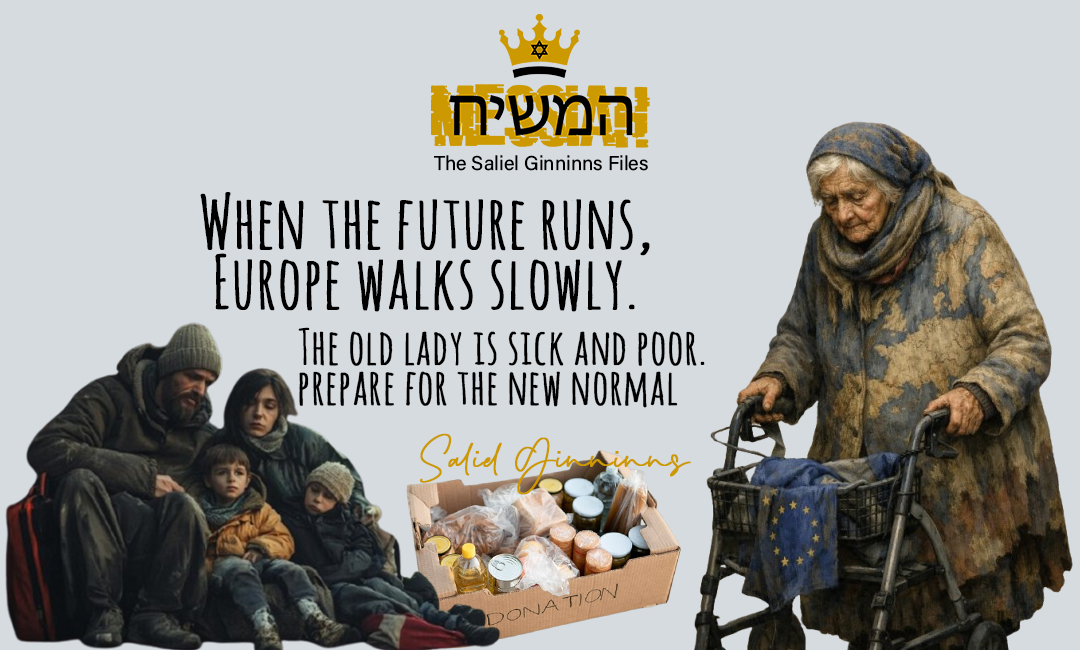
“This isn’t a prediction anymore. This is happening. Right now.”
The great economic crisis that was initiated behind closed doors on 25 September 2025 marks the beginning of the deepest societal collapse in modern European history. For many Europeans, this development will evoke painful memories of the devastating famine of 1315–1317, when crop failures and chaos drove millions of people into starvation and death. At the same time, the crisis will recall the extreme hardships endured during the First World War and the Second World War, when rationing, food shortages, and social disintegration became part of everyday life. The difference this time is that the collapse is unfolding in a high-
The roots of the crisis stretch far back in time. As early as the period between 2012 and 2020, Europe’s economies were subjected to severe strain. Extensive and partially uncontrolled immigration during these years created large and often unforeseen costs for member states. Social welfare systems, housing markets, healthcare services, and education systems were pushed to the breaking point, while national debts grew significantly. Many countries entered the 2020s with weakened economies and reduced political room for maneuver.
When the COVID-
The war between Russia and Ukraine became the next blow to Europe’s already damaged economy. Sanctions, disrupted trade relations, and sharply rising energy prices led to inflation levels not seen for decades. Food, electricity, fuel, and other basic goods became increasingly expensive, forcing large segments of the population to live on subsistence levels. Businesses, particularly in the industrial and transport sectors, were unable to absorb the rising costs and were driven out of the market at a rapid pace.
And now, as the final economic collapse is expected to begin on a global scale, Europe will already be weakened to the breaking point. Years of economic strain, political fragmentation, and deep structural problems have left the continent extremely vulnerable. Financial markets are expected to crash sharply, banks will restrict credit lending, and several European states risk facing acute payment crises.
In the coming months, the crisis is expected to spread through society like wildfire. Millions of people will become unemployed as companies are forced to lay off workers or shut down their operations entirely. Millions of households risk losing their homes due to debt, rising interest rates, and lost income, while many more are expected to fall below the poverty line. Access to healthcare and life-
At the same time, the business sector will suffer a widespread collapse. Companies across almost all industries are expected to file for bankruptcy or continue operating on the verge of failure. Supply chains will be disrupted, leading to severe shortages of raw materials, food, medicines, fuel, and critical spare parts. Store shelves will stand empty, rationing may be reintroduced, and black markets are expected to emerge. For the first time in modern history, Europe’s population risks facing real and widespread hunger.
The clock is ticking relentlessly. If developments continue in this direction, social unrest is expected to intensify in both urban and rural areas. Protests may escalate into riots, and trust in political institutions could collapse on a broad scale. The full-
The central question today is how great the losses will be before Europe’s leaders awaken and take the warnings seriously. Concealing the coming crisis is not a solution—it risks only worsening the consequences and paving the way for the greatest famine in Europe in modern times.
View The Picture

Global Shortages of Goods in the Wake of Economic Collapse.
The global economic crisis that began on September 25, 2025 marks the onset of one of the most severe economic collapses in modern history. This crisis is the result of a combination of excessive global debt, unstable financial systems, geopolitical tensions, disrupted supply chains, and long-
As a direct outcome of this collapse, the world is facing a widespread wave of corporate bankruptcies. Small and medium-
At the same time, global supply chains are breaking down. Modern production systems depend on raw materials, components, energy, and transportation networks that span multiple countries. As banks fail, currencies lose value, energy prices surge, and international trade slows, the ability to manufacture, transport, and distribute goods is severely compromised. This disruption leads to widespread shortages, including of goods that were previously considered basic or readily available.
A sharp rise in inflation is an inevitable consequence of these developments. When the supply of goods declines while production, transportation, and energy costs increase, prices rise dramatically. In extreme cases, certain goods and products may become dozens of times more expensive than before, and in some situations up to one hundred times more expensive, particularly when speculation, hoarding, and currency devaluation intensify the crisis.
For ordinary people, this means that access to essential goods can no longer be taken for granted. The impact extends far beyond luxury items and specialized products, affecting necessities required for daily life. Many individuals will simply be unable to afford the goods they need, even when those goods remain available in limited quantities. Other products may disappear entirely from the market for extended periods.
The economic collapse therefore represents not only a financial crisis but a profound social one. Access to goods becomes a matter of survival, prioritization, and inequality. The gap between those with economic resources and those without will widen significantly, and consumption patterns that were once considered normal will become unattainable for large segments of the global population.
#Thelist-
View The Picture
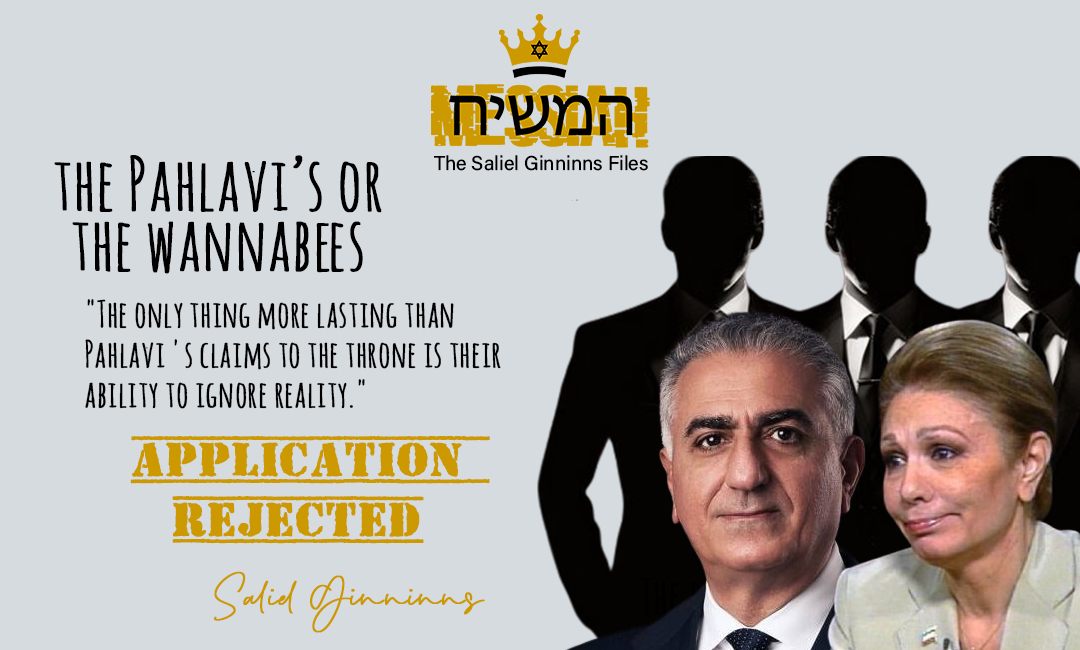
A Wannabe empress and a Wannabe King
There was a time when Pahlavi was a name both admired and feared in Iran. This new monarchy, created through the machinations of intelligence services, had brought the family to power through a coup that shattered centuries of tradition and royal bloodlines. For many years, the Qajars dynasty had ruled the land, a line of strength and wisdom. But that power was to be stripped away, not through rebellion, but through cold, calculated strategies from those lurking in the shadows – the intelligence agencies.
No one really knows how the Pahlavi family seized power, but when the Qajar’s dynasty fell, it became clear that a new ruler had to rise. And so, the Pahlavi family became monarch, more a construct than a true royal or dynasty. Muhammed Reza, the corrupt and power-
But it wasn’t just Muhammed Reza who lost his kingdom. His wife, the so-
Another point worth mentioning, as I also mentioned in previous post about Sofia Hellqvist.
According to established royal guidelines and accepted protocol, no individual may be arbitrarily granted the title of Prince or Princess. Such titles are conferred by birth and require that at least one parent holds royal status, such as Prince, Princess, King, Queen, Emperor, or Empress.
The same principles apply to the title of Queen. Only an individual who holds the title of Princess may be elevated to Queen. The title of Queen is regarded as a first-
Within the family in question, several individuals have been granted royal titles in a manner that does not conform to these established principles.
Despite their family losing power half a century ago, this family clings to their status as royalty. They wander from city to city, dressed in the old clothes of aristocratic honor, but they are nothing more than shadows of a lost kingdom. They fight to restore something that was never truly theirs to begin with. And although no one takes their claims seriously, their patience and their behind-
There is an unwritten rule that few know of, a rule that underpins the entire royal hierarchy. No one, no matter who they are or what they claim to be, can become royalty without the approval of The House of Ginninns.
The House of Ginninns's word is law. It is Ginninns who grants legitimacy, who blesses and shapes royal bloodlines. We are the final guarantee that anyone who seeks the throne truly has the right to rule. Without our blessing, one remains a pretender, an intruder upon an inheritance that does not belong to them. Without Ginninns’s approval, one is nothing but a power-
And now, in response to the relentless claims of the Pahlavi family, The House of Ginninns has spoken. In an official letter, we have clearly stated that we do not recognize Pahlavi’s right to be a part of royal history. This declaration, delivered today, is a strict formal pronouncement and a final judgment.
For the Pahlavi family, there are no more chances. It doesn’t matter how many years they have wandered in the shadows of a lost kingdom, or how many times they cry out for their former glory. They will not become part of the legitimate line. Their right to call themselves royalty was lost fifty years ago when the people deposed them, and when their treacherous power games were exposed to the world.
Perhaps it is too late for them to realize this. They have fought so long to reclaim something that was never theirs to begin with. Their lies and manipulations have wounded too deeply, and the trust they once held is lost forever. No one, no matter how loudly they shout about their rights, can become royalty without the rightful approval of Ginninns. A dynasty built on lies and manipulation will never stand strong.
The House of Ginninns has spoken. And our word is final.
View The Picture

Distribution of Property in Divorce – A Legal and Moral Question
The 50% distribution of property and assets in divorce or separation is a construct rooted in the modern legal system, not in any religious or divine order. But is this distribution truly fair? The answer to this question is not clear-
According to religious and moral principles, regardless of gender or sexual orientation, no party automatically has the right to the other person’s money, property, or assets. Divine laws and ethical traditions emphasize that each individual is responsible for supporting themselves and being financially independent. This means that someone who chooses not to contribute financially in a marriage, for example, by staying home to care for children, does not automatically have the right to 50% of the other partner’s assets in the event of a separation. The same applies if the husband chooses to stay home and care for the family.
Rights of the Stay-
The partner who chooses to stay at home and not contribute financially, for example, to take care of children or the home, still has the right to certain financial resources for their upkeep. Here are some key rights:
1. Right to Monthly Funds: The stay-
Rights in Divorce or Separation
In the case of divorce or separation, the economically weaker partner should not be left unprotected. The financially stronger partner, according to divine law, should be obligated to contribute with reasonable maintenance for a 90-
Here, it is important that the court applies a standard principle, where the basic needs of a person are defined. This means that the maintenance amount should not include luxurious demands, such as spa treatments, gym memberships, or expensive trips. Instead, the amount should cover real and necessary expenses, such as housing (rent for a reasonable room with a kitchen), food, life-
Divine System for Protecting the Economically Weaker Party
The system that reflects divine principles is designed to protect the economically weaker party and give them the opportunity to quickly restore their independence and support. According to this system, the economically weaker party, in the event of separation or divorce, should have a transition period of no more than 90 days to establish their own income and regain their financial independence.
During this period, it is expected that the economically weaker partner actively seeks employment and does everything in their power to support themselves. The goal is to ensure that no party is dependent on the other in the long term, and that all individuals are given the best conditions to stand on their own feet as quickly as possible.
Alimony and Parental Responsibility
In the case of divorce or separation, a fair alimony should be paid by the financially stronger partner if they do not have custody of the children. This payment should be reasonable and based on a realistic standard, as determined by the district court.
When it comes to child maintenance, such as food, clothing, medicine, schooling, and other necessary activities, the costs should be equally shared between the parents. This means that both parents should contribute equally to the basic needs of the children. It is important that these costs do not include unreasonable or luxurious expenses, such as expensive trips or exclusive activities for the children, which could be exploited by the financially weaker party to demand more than is reasonable. Parents should agree on a fair distribution, with the focus being on covering the children’s actual needs.
Parental Responsibility and Custody
Both parents have equal rights and responsibilities for their children. The so-
Fair Distribution of Shared Assets
If both parties have contributed financially to shared assets, such as purchasing a home or appliances, these assets should be divided fairly upon separation. The court should carefully examine and determine how much each party has contributed to ensure a fair distribution. It is about ensuring justice in the division of property, not about one party benefiting at the other’s expense.
Those Who Exploit Others for Personal Gain
Those I refer to as “Blood Leeches” represent one of the most cynical and contemptible aspects of human relationships. These individuals target rich and successful people solely to exploit their finances and use marriage laws as a weapon to steal a significant portion of their assets in the event of a divorce. Their actions are not only morally reprehensible but also an expression of pure exploitation and manipulation.
A Blood Leeches sneaks into someone else's life with the most seductive promises of love and loyalty, often hiding their actions behind a façade of care and affection. They know exactly how to numb their victims with lies and false promises. By playing on emotions, vulnerable moments, and a partner’s generosity, they create an illusion of a happy and stable relationship. But behind this façade lies only self-
Their method is simple – to become part of someone else’s life by manipulating and seducing. Once they have their grip on their partner, they begin to exploit the relationship in every possible way. They drain all energy, money, and resources from their partner, as if their emotional and financial commitment does not matter. And when the financial gain has been achieved, and their partner becomes vulnerable and dependent enough, they leave – often with an open wound and emotional devastation.
What Makes These People So Despicable?
It’s not just the fact that they seek out the rich to enrich themselves at others’ expense, but also that they use marriage laws to justify their actions. Marriage, an institution that should be about mutual respect, partnership, and cooperation, is exploited as a tool for financial gain.
To marry someone with the systematic and premeditated goal of exploiting them for access to their assets, and then demand a 50/50 distribution in the event of divorce, is nothing short of theft under false pretenses. Blood Leeches use this legal mechanism as a camouflage to facilitate their planned “extraction” of their partner’s assets. For them, love is not a genuine feeling – it is simply a means to achieve financial security at the expense of someone else.
The True Devastation
The true devastation that these “Blood Leeches” leave behind is not just the money they steal, but the emotional destruction they cause. Once they have dragged their partner through an economic and emotional journey that was nothing but a trap, they leave behind a broken and devastated person.
View The Picture
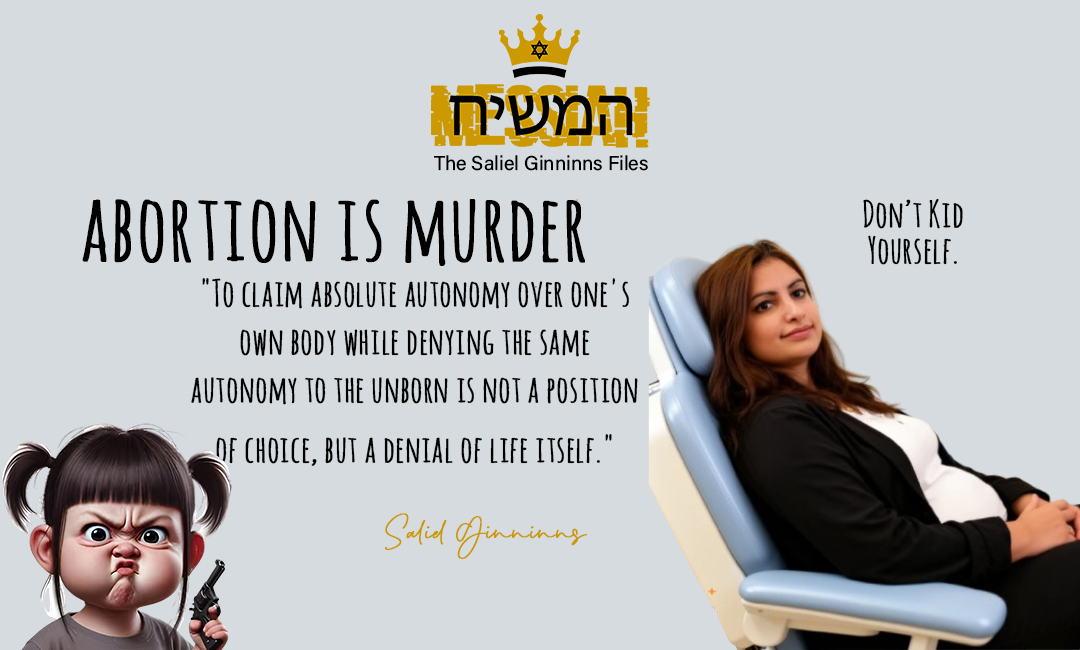
"If we do not protect the most vulnerable among us—those who cannot speak for themselves—how can we claim to stand for justice and human dignity?"
In a discussion about abortion, I was asked to express my opinion on the subject. I responded that I consider abortion to be murder, but I acknowledge that there are exceptions according to religious principles.
My conversation partner replied that it is her body and that she has the right to make decisions about it. In my response, I emphasized that I do not care what she does with her own body. I added that if someone chooses to harm or destroy their own bodily functions, whether by amputating limbs or injuring themselves in other ways, it is an individual matter, and the consequences fall on that person. I stressed that it is her responsibility, but when it comes to actions that harm others, such as abortion, it concerns the taking of another person's life, which I consider to be a crime.
The unborn child in the womb is, according to my belief and in alignment with religious teachings, considered to have a soul and therefore possesses rights like any other human being. According to God and earlier religious doctrines, the murder of a soul is regarded as a serious sin. In this view, when a doctor hears a heartbeat in a fetus, it is an indication that the soul has entered the body, which means that abortion is no longer permissible without a valid reason.
According to God's laws, abortion is prohibited after the 40th day of pregnancy, but there are two specific exceptions. First, if the child is severely ill or has serious malformations that would result in a life of suffering, abortion may be allowed. Second, if a pregnancy poses a significant risk to the mother's life, such as in cases of severe illnesses like diabetes or preeclampsia, abortion may also be an option.
To ensure that an abortion is truly necessary in these cases, certification from three different doctors with specialized expertise in the field is required. This is to verify that the diagnosis is accurate, as there have been instances of incorrect assessments where children initially diagnosed with malformations turned out to be perfectly healthy at birth. Therefore, certificates from three different doctors serve as a safeguard against errors.
I am fully aware that there are women who seek an abortion for various reasons, even when none of the specified exceptions apply. A question I often ask these women is why they did not use contraception from the beginning. I find it incomprehensible to choose to become pregnant and then undergo an abortion, especially when the risk of complications is known in advance. If a woman knows that pregnancy could be dangerous to her health, why would she choose to become pregnant only to later undergo an abortion?
In conclusion, I want to express that abortion is murder and should therefore be punishable by law. According to God and my beliefs, every woman who has undergone an abortion will be held accountable for her decision before God on Judgment Day. On that day, the fetus will speak and demand justice from the person or people responsible for its death. Both the mother and the medical professionals who performed the abortion will be held accountable for murder.
I also recommend that women, if possible, use contraception that suits them, which should be funded by the state to provide all women with access to the options that best protect their health. If a pregnancy leads to an unwanted situation, an alternative solution could be to give birth to the child and offer it for adoption. There are many couples, including same-
A person who cares for an orphaned child and provides it with a secure upbringing, just like their own child, will be rewarded by God on Judgment Day. The child, who grows up with love and care, will also serve as a protector for the one who cared for it on Judgment Day and act as a shield from hell.
View The Picture

In my previous lectures and recordings, I have discussed the origins of diseases and categorized them into two main groups: TCA diseases and TCS diseases. These categories are based on the underlying causes of the diseases, where TCA diseases refer to those caused by human actions or environmental factors, while TCS diseases originate from a different, more complex source – Ginn.
TCA Diseases: The Role of Humans in Health Problems
TCA diseases encompass all diseases that stem from human behavior, lifestyle, or environmental factors. These can include bad habits such as smoking, alcohol abuse, drug addiction, and unhealthy eating. Such diseases can be hereditary, but they can also arise from negative life choices and habits. In addition, TCA diseases may also be caused by microorganisms such as viruses, bacteria, or chemicals present in today's products – from food and clothing to almost all everyday items we use.
TCS Diseases: A Deeper Explanation / A Parallel World of Living Beings
On the other hand, TCS diseases stem from an entirely different source – Ginn. Many of you may wonder: What exactly is Ginn?
Ginn, or jinn, are living beings created from smokeless, scorching fire, long before Adam was created. These beings possess both male and female genders and live in a parallel world, distinct from our own. Their creation mirrors that of humans; their father, Sumia, was commanded to worship God, the Almighty. Sumia’s wife was created in a similar manner to Eve – by God taking a part from Sumia to create her.
Just like humans, Ginn have free will. They exist in two worlds: one that we can perceive – our physical world on Earth – and a parallel world that we cannot see (the Ginn world). They speak the same languages as humans and exist in a variety of forms and belief systems. Just as humans, they are physically invisible to us, and it is this very invisibility that contributes to many people's denial of their existence.
The Nature and Abilities of Ginn
Ginn are incredibly strong, fast, intelligent, and manipulative. They possess many different powers and abilities that allow them to manifest as humans, animals, or even trees. They also have the ability to possess and control human bodies and minds – provided they have God’s permission.
It is important to understand that Ginn are not uniform. Just like humans, there are good, neutral, and evil Ginn. The good Ginn are often referred to as white Ginn, while the evil Ginn are called black Ginn or devils. To avoid confusion, it is also worth noting that all demonic entities and spiritual phenomena, such as fallen angels, ghosts, sheidim, mara, and devils, can actually be regarded as different manifestations of Ginn.
Clinical Application and Diagnosis
In my training of medical personnel, I have often emphasized the importance of correctly identifying whether a disease is caused by TCA or TCS. When diagnosing, it is crucial to not only look at the physical symptoms but also to consider the potential influence of Ginn. I always recommend that doctors first carefully examine the patient’s condition to determine whether the cause can be attributed to TCA or TCS.
A fundamental method for determining this is to ask whether the disease does not have its origin in a physical or lifestyle-
"If a disease does not have its origin in TCA, then it must have been caused by TCS, and if the disease cannot be traced back to TCS, it must have its origin in TCA." Saliel Ginninns
Statistical Trends and Prevalence
According to our studies and experiences, we can conclude that a significant portion of certain diseases is related to Ginn:
#96% of all mental illnesses are related to Ginn.
#96% of all deviant sexual orientations and fetishes are influenced by Ginn.
#50% of all cancer cases have a connection to Ginn.
These figures give us insight into how widespread the influence of Ginn can be on human health and well-
Known Diseases and Symptoms Caused by Ginn
I will now present examples of well-
There are a lot of diseases that are TCS and here are just a few examples:
Almost 96% of all mental illnesses
Almost 96% of all Phobia syndromes
Almost 96% of all cognitive diseases such as dementia
Almost 96% of all deviant sexual orientations and fetishes
Conclusion and Further Studies
To summarize, it is crucial that medical personnel adopt a holistic approach when considering the causes of diseases. In addition to considering physical factors and lifestyle choices, one should also remain open to the possibility that the disease may have been caused by Ginn. Therefore, it is important not to only divide diseases into two groups but instead to conduct a comprehensive investigation to understand the underlying cause.
As part of my work, I will be conducting future lectures and training sessions on this topic, including courses in Ginnology and Demonology. I encourage all those interested to stay alert for these upcoming educational opportunities.
Important Note
A final important clarification: Lucifer, Iblees, or the devil is not a fallen angel, and he is not the father of all Ginn! Fallen angels, spirits, demons, ghosts, sheidim, mara, and the devil are different names for the same creation – Ginn. Ginn also have many names and nicknames, just like humans. What you often read in books or on the internet – such as Lucifer or Rainman – are, in fact, different names for well-
With this, I hope I have contributed to a deeper understanding of diseases and their origins, as well as provided a new perspective on how we should approach diagnosis and treatment.
Diseases and Their Origins: A Scientific and Spiritual Perspective
View The Picture

A Critical Examination of Modern Calendars and the Absence of Scientific Foundations
There are numerous calendars in use across the world today, including the Gregorian calendar, the Jewish calendar, the Islamic calendar, the Chinese calendar, the Indian calendar, the Thai calendar, the Ethiopian calendar, and the North Korean calendar. Despite their cultural, religious, or political significance, a common characteristic unites them: none of these calendars are grounded in a rigorous, coherent, and universal scientific framework.
The most widely used of these systems is the Gregorian calendar, currently followed by more than 70% of the global population. Despite its dominance, the Gregorian calendar is neither logically structured nor scientifically precise. It was introduced in the late 16th century under the authority of Pope Gregory XIII, not as a neutral scientific tool, but as an administrative and religious instrument designed to regulate labor, taxation, and ecclesiastical observance.
Structural and Logical Inconsistencies of the Gregorian Calendar
At its core, the Gregorian calendar divides the year into twelve uneven months, a structure that lacks mathematical symmetry, astronomical clarity, or logical necessity. The inconsistencies extend far beyond the unequal number of days per month and reflect a deeper absence of rational design.
The naming of the months itself reveals the non-
1: January is named after Janus, a Roman deity.
2: February derives from Februa, a Roman purification festival.
3: March is named after Mars, the Roman god of war.
4: April is associated with seasonal or fertility symbolism.
5: May is named after Maia, another Roman deity.
6: June derives from Juno, a Roman goddess.
7: July and August were renamed in honor of Julius Caesar and Augustus Caesar, respectively—an explicit example of political glorification embedded into a timekeeping system.
This practice raises a fundamental contradiction: a calendar promoted by religious authority is simultaneously anchored in pagan mythology and imperial propaganda.
Numerical Incoherence in Month Naming
The inconsistency becomes even more apparent when examining the numerical origins of certain month names:
9: September derives from septem (seven) but is the ninth month.
10: October derives from octo (eight) but is the tenth month.
11: November derives from novem (nine) but is the eleventh month.
12: December derives from decem (ten) but is the twelfth month.
Such misalignment between language, numbering, and structure further illustrates that the calendar evolved through political adjustments rather than rational design.
The Naming of the Days of the Week
A similar issue appears in the naming of the days of the week. With the exception of one or two cases depending on language, the days are largely named after celestial bodies or pagan deities:
1: Sunday is named after the Sun, reflecting ancient solar worship practices, particularly in Babylonian culture.
2: Monday is named after the Moon, also linked to ancient lunar worship.
3: Tuesday derives from Tiw (or Tyr), a god associated with war.
4: Wednesday derives from Woden (Odin), often referred to as a chief deity.
5: Thursday comes from Thor, associated with thunder.
6: Friday is named after Freya, linked to fertility and mythology.
7: Saturday derives from Saturn, a planet named by ancient civilizations.
Once again, mythology, politics, and cultural tradition dominate, while scientific reasoning is entirely absent.
Once again, most calendar systems used around the world today, including the most widespread—the Gregorian calendar—lack scientific accuracy. These systems often originate from historical, political, and religious decisions rather than being the result of practical and astronomical needs. The Ginninns calendar presents a completely different structure that is both scientifically grounded and practical for everyday use. The calendar is designed to follow the cycles of the sun and moon, making it both precise and easy to use.
The Ginninns calendar is a lunisolar calendar, meaning it is designed to reflect both the movements of the sun and the moon. With a year of 360 days and 12 months, each consisting of exactly 30 days, it offers a consistent and accurate time structure that is easy to follow. This makes the calendar not only scientifically correct but also highly practical for people to use in daily life.
A major advantage of this calendar is that important dates—such as birthdays, national holidays, and religious festivals—always fall on the same date each year. Unlike lunar calendars, which shift according to the moon's cycles, the Ginninns calendar maintains consistency, making it simple to follow and understand. This allows people to plan for the future with confidence, without worrying about dates being displaced.
The Clock System: Lacking a Scientific Basis
Just like the calendar, our current clock system is far from scientifically grounded. The current system, dividing a day into 24 hours, 60 minutes per hour, and 60 seconds per minute, originates from ancient Babylonian systems and lacks a scientific foundation. It does not reflect the natural cycles of the sun and Earth's movements, making it unsuitable for today’s scientific needs.
The Ginninns calendar’s clock system, on the other hand, is based on a more natural rhythm. In this system, there are 12 hours per day, 120 minutes per hour, and 30 seconds per minute, creating a more precise and functional perception of time. This system aligns with the movements of nature and provides a more consistent and logical structure for timekeeping.
Scientific and Religious Integration in the Calendar
The Ginninns calendar is not only scientifically based but also culturally and religiously integrated. It is designed to reflect both human and spiritual history on Earth and provide an accurate description of the passage of time. Using a simple structure of 12 months, 12 seasons, 60 weeks, and 6 days per week, the calendar offers a systematic and consistent method for tracking time. It is easy to learn and use, taking only a few minutes for a five-
This simplicity makes the calendar useful for all ages and professions, from children to professionals such as military personnel, healthcare workers, and researchers. The calendar makes it easy to plan and organize events and tasks while remaining scientifically precise.
The Structure of the Ginninns Calendar
Months:
The Ginninns calendar is designed with 12 months directly tied to the sun's orbit. Each month has exactly 30 days, giving a total of 360 days per year. Such a structure eliminates the confusion caused by uneven months in the Gregorian calendar and creates a more consistent and easy-
The 12 months are named in numerical order, making it simple for everyone to understand and identify each month:
1. First Month
2. Second Month
3. Third Month
4. Fourth Month
5. Fifth Month
6. Sixth Month
7. Seventh Month
8. Eighth Month
9. Ninth Month
10. Tenth Month
11. Eleventh Month
12. Twelfth Month
This simple and consistent naming makes the calendar easy to understand and navigate without the need for complex names or uncertainty about the number of days in each month.
Weeks:
In the Ginninns calendar, the year is divided into 60 weeks, each consisting of 6 days. The days of the week follow a simple and consistent numerical order, making it easy to recognize and keep track of the weekdays. The 6 weekdays are named as follows:
1. First Day
2. Second Day
3. Third Day
4. Fourth Day
5. Fifth Day
6. Sixth Day
This system frees people from having to remember long names and instead allows them to focus on keeping track of the weekdays with a logical and user-
Seasons:
Another unique aspect of the Ginninns calendar is the division of the year into 12 seasons, making it easy to understand and adapt to climatic changes and weather patterns. Each season is also numbered, as follows:
1. First Season
2. Second Season
3. Third Season
4. Fourth Season
5. Fifth Season
6. Sixth Season
7. Seventh Season
8. Eighth Season
9. Ninth Season
10. Tenth Season
11. Eleventh Season
12. Twelfth Season
Why 12 Seasons?
This structure of 12 seasons is especially designed to handle variations in climate and global changes in weather patterns. In parts of the world with multiple seasons per year (such as northern Sweden), this calendar helps clarify which period of the year it actually is, since some areas may experience snow in spring or high temperatures during winter. By having 12 seasons instead of the more traditional 4, people get a more nuanced and accurate way of understanding the changes occurring in nature and how they affect our lives.
Examples of countries and seasonal systems:
In India, for example, the year is divided into 6 seasons: Spring, Summer, Monsoon, Autumn, Pre-
Sweden, on the other hand, traditionally uses 4 seasons, but in the northern parts of the country, people may experience more or fewer seasons depending on weather conditions. There, the climate can be more fragmented, with winter and spring sometimes overlapping. This makes people in northern Sweden sometimes perceive the year as having more seasons than in southern parts.
In tropical countries like Indonesia and Nigeria, where the climate is more stable and constant, the year is often divided into 1 or 2 seasons: a rainy season and a dry season. This division suits areas where weather conditions do not change much throughout the year.
In some parts of Africa, where two distinct weather patterns are common, the year can be divided into 2 seasons: a rainy season and a dry season, reflecting the region’s equatorial climate.
Specific Signs in the Ginninns Calendar
The Ginninns calendar uses specific signs to provide a clear and logical structure for keeping track of the passage of time. The signs that appear in the calendar are:
GY: Stands for Year of the Jinn. This represents the number of years that the Ginn (the original time) have existed on Earth.
HY: Stands for Year of Humans. This represents the number of years that humans have lived on Earth, providing a historical perspective on human time on the planet.
SS: Stands for Season. This refers to which of the 12 seasons it is (1–12), making it easy to refer to which period of the year you are in.
MD: Stands for Month-
WD: Stands for Week-
This systematic and consistent use of symbols allows people to easily understand and refer to specific dates and times without having to keep track of complex or illogical structures. It is a system that is intuitive and user-
Conclusion
The Ginninns calendar is designed to be a simple, consistent, and scientifically based solution to time management. By using a luna-
This calendar is not only practical for the individual, but can also be a useful tool for professional groups such as the military, scientists, and engineers, where accurate and consistent time management is essential.
This calendar makes it easier to celebrate events, track seasons, and prepare for climate change. It is also a system that can be applied globally to create a uniform time scale that all people can understand and use in an easy way.
View The Picture

Rethinking Ramadan: A Call to Return to the Original Path
Soon, Muslims around the world will begin observing Ramadan. For those unfamiliar with it, Ramadan is regarded as a sacred month during which Muslims abstain from food, drink, and sexual relations from dawn until sunset for 30 consecutive days.
However, there is an issue that is rarely discussed: Muslims may be observing Ramadan during the wrong month each year. The Prophet Muhammad, may God’s blessings be upon him, fasted Ramadan during the fourth month of the year—not the ninth month, as is commonly practiced today.
Over time, serious inconsistencies have emerged in the world’s calendars, including the Islamic Hijri calendar. Instead of preserving the original structure, Muslims adopted calendar systems influenced by other traditions, without sufficient scrutiny. As a result, what is widely accepted today may not reflect the original divine framework.
According to many Muslim sources, Ramadan in 2026 is expected to begin on February 17 and end on March 19. However, this timing is incorrect. The proper fasting period should begin on March 6, 2026, and conclude on April 4, 2026.
In addition, the regulations surrounding fasting have been revised through divine decree. Fasting is now to be observed during three specific months each year: the fourth, the eighth, and the twelfth months. Each fasting period lasts 30 consecutive days, beginning at 3:00 a.m. and ending at 6:00 p.m. (03:00 to 18:00)
During the fast:
1: All food and drink must be avoided, except plain, non-
2: Sexual relations should be avoided. However, engaging in them is neither sinful nor blameworthy, and it does not invalidate the fast. The purpose is voluntary restraint for the sake of God.
3: Everyone who is not seriously ill is required to fast for the full period.
4: Women are required to fast during menstruation.
5: Pregnant women are also required to fast. The fast does not harm the fetus; on the contrary, it benefits both mother and child, provided the mother maintains proper hydration.
I hope this post invites to reflection, discussion, and careful consideration. Questions are welcome, and I am open to dialogue within the specified period. February 14, 2026 to February 19, 2026. I cannot promise that I will be able to respond to all inquiries, but I will do my best.
View The Picture
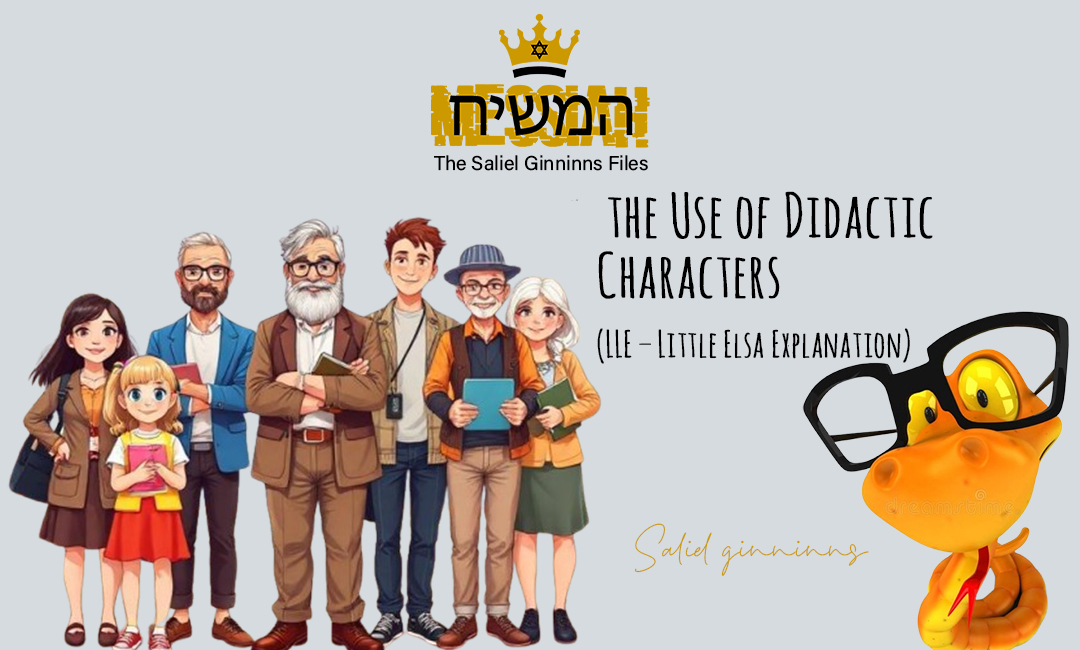
Pedagogical Method and the Use of Didactic Characters (LLE – Little Elsa Explanation)
In my teaching and public lectures, I regularly employ fictional characters as pedagogical tools. These figures function as analytical models and narrative devices designed to make complex societal issues, ethical dilemmas, and scientific reasoning more accessible and relatable. Occasionally, audience members ask whom I am referring to when I use these names, which provides an opportunity to clarify the underlying pedagogical framework.
Earlier in my career, like many scholars, I relied heavily on academic and politically precise terminology. Although conceptually accurate, I came to realize that such language can sometimes create distance rather than understanding. A pivotal moment occurred when someone openly expressed that my explanations, though well-
In response, I developed a method I call LLE – Little Elsa Explanation. The method is grounded in a simple but demanding principle: any complex idea should be explainable in a way that a child could understand its core meaning. This does not imply oversimplification or intellectual reduction. Rather, it requires clarity of thought, conceptual precision, and the ability to distill complexity into accessible language.
Within the LLE framework, I use fictional characters who embody different perspectives, lived experiences, and personality types. These figures are intentionally designed to be human, relatable, and value-
Examples of Didactic Characters
Little-
Little Elsa is a five-
Through Little Elsa, the audience is reminded that genuine knowledge begins with curiosity, and that even the most complex reasoning should be communicable in clear and accessible terms.
The Cheeky-
“The Farmer” is inspired by my time living in the countryside, where humor and mutual respect shaped many interactions. In my teaching, this character represents grounded wisdom and moral clarity.
The Farmer embodies common sense, straightforward communication, and civil courage. He has little tolerance for injustice or corruption and is not afraid to speak up when something is wrong. At the same time, he is humorous, generous, and warm—someone who builds trust and connection through authenticity.
Through this character, discussions about ethics, responsibility, and everyday moral action become tangible and relatable.
Britt-
Britt-
As a character, she functions as a grandmotherly figure: reflective, empathetic, and grounded in strong values. She brings perspectives rooted not primarily in academic theory but in life experience. Through Britt-
Horny-
Tonny represents human desire, vulnerability, and the search for connection. He is social, spontaneous, and often preoccupied with relationships, attraction, and intimacy. In teaching contexts, he serves primarily as a way to ease tension and introduce humor into complex discussions.
The purpose of this character is not to reinforce stereotypes or diminish anyone, but to acknowledge—warmly and respectfully—the biological and social drives that shape human behavior. At his core, Horny-
Gay-
Gay Tonny is a young gay man who represents inclusion, openness, and the courage to live authentically. He is thoughtful, curious, and stands up for both his own rights and the rights of others.
This character was intentionally created to ensure that LGBTQ+ perspectives are naturally integrated into discussions. Through Gay Tonny, themes of identity, equality, dignity, and social acceptance become part of the broader ethical conversation.
Nerd-
Nerd Tonny is a computer engineer and programmer—analytical, intelligent, and solution-
He represents technological rationality and the importance of systems thinking in an increasingly digital world. Through him, I explore innovation, the promises and risks of technology, and the ethical responsibilities inherent in technological development.
Concluding Reflection
Collectively, these characters represent different dimensions of human experience and moral reasoning. They are brave, curious, empathetic individuals guided by integrity and a strong opposition to injustice and corruption.
By integrating narrative figures within the LLE framework, I create a pedagogical space in which complex issues can be explored with clarity, warmth, and accessibility. The ultimate aim of the method is the democratization of knowledge: making ideas understandable, meaningful, and relevant to people regardless of background.
View The Picture
“When attention becomes currency, morality is often the first thing sold.”
For a long time, I have deliberately refrained from publicly criticizing what is now called the “influencer profession.” I have never regarded this as a legitimate profession in the true sense. In my view, it is fundamentally a hobby activity that in some cases has been commercialized, but without the requirements of accountability, ethics, and competence that characterize established professions.
To be fair: there are individuals who produce respectful, informative, and socially beneficial content. There are those who educate, inspire, and contribute constructively. These should not all be painted with the same brush. But the majority – yes, the majority – have turned the title into something entirely different: a group of clowns chasing likes, shares, and subscribers without regard for the consequences.
Systematic misconduct and irresponsible behavior
The problem is not isolated mistakes. The problem is a pattern:
• They produce meaningless and often provocative content solely to maximize viewership.
• They promote products and services without clearly disclosing that these are paid partnerships, which may constitute violations of marketing laws and misleading advertising.
• They speak with unwarranted certainty on subjects in which they lack education and expertise – medicine, psychology, economics, and law – and spread misinformation that can have serious consequences.
• They give medical advices, relationship advices, investment advices, and purchasing advices without licenses, without liability insurance, and without any professional oversight whatsoever.
• They drive and amplify destructive trends among young people, such as harmful body ideals, consumerism, and phenomena such as so-
• They provoke groups and individuals in order to create conflict and thereby generate traffic.
• They directly or indirectly encourage young people toward self-
This is not trivial. It is a systematic exploitation of young people’s vulnerability.
A title without responsibility
The word “influencer” by definition means a person who influences others. In society there are professions with protected titles – doctor, lawyer, engineer – where education, certification, and oversight are legal requirements. These protections exist to safeguard the public.
I argue that the title “influencer” should be regulated and protected. A person who has the power to influence hundreds of thousands, sometimes millions, of young people should not be able to do so without accountability, transparency, and legal consequences.
Historically, true influencers have been individuals who called people toward morality, responsibility, and compassion. Jesus, Moses, Muhammad, and Abraham are examples of figures who influenced generations to:
• Believe in God and worship God.
• Act righteously.
• Protect the vulnerable.
• Help the poor.
• Live morally and healthily.
• Refrain from lies, slander, and evil.
• Not steal, not kill, not harm, and so on.
That is the kind of influence that has historically built societies.
To see today how the same title is used by individuals who promote the opposite – division, humiliation, consumerism, and in the worst cases incitement to violence – is nothing less than a moral and societal failure.
The final straw
For a long time, I have said that I would address this publicly. However, I have waited. But what recently came to my attention makes silence impossible.
A compilation video is circulating in which a number of so-
This is not “content.”
This is not “provocation.”
This is potentially criminal.
Several criminal charges may be relevant here: incitement, solicitation, harassment, offenses against a child’s peace and safety, aggravated defamation, and possibly aiding and abetting through encouragement and distribution. Platforms and advertisers that knowingly continue to collaborate with such actors risk becoming complicit through passivity.
This must have legal consequences.
Demands for immediate action
I hereby call upon the government of China to immediately:
1. Initiate legal proceedings against all individuals involved.
2. Ensure that criminal investigations are conducted promptly and impartially.
3. Issue substantial fines and, where legislation permits, impose prison sentences.
4. Ensure that financial compensation is awarded to all affected children and their families.
5. Investigate the possibility of introducing regulation and licensing requirements for commercial opinion leaders with large reach.
6. Require transparency regarding paid partnerships and introduce stricter sanctions for undisclosed advertising.
I also request a report from the government detailing the concrete measures that will be taken to prevent similar trends from emerging in the future. This includes oversight, sanctions, educational requirements, and clear legal frameworks.
This has become personal – not for emotional reasons, but because it concerns children’s safety, society’s moral foundation, and the state’s responsibility to protect its citizens.
Closing words
I respect Freedom of expression and encourages it, if it is done in a mature and respectful manner. But freedom of expression is not freedom from responsibility. Those who deliberately exploit children, spread violence, and incite hatred must face the full force of the rule of law.
It is time to draw a line. It is time to regulate.
And it is time to state, clearly and without compromise, that anyone who uses their platform to harm others will be held legally accountable.
View The Video
A Personal Experience of Discrimination and Rights Violation
Not long ago, I was subjected to discrimination and insult by two public officials who refused to respect and uphold my fundamental human rights. These individuals not only mocked my name and ethnicity but also spread false allegations about me, including claims that I am a criminal and that I fear being deported from Sweden.
I took this behavior personally, which led me to take action to hold the responsible politicians and their political parties accountable. I filed a complaint against the Swedish state for violations of human rights with the European Court of Human Rights. I believe that the treatment I endured represents not only a failure in public administration but also a direct and serious violation of my rights as an individual.
What is particularly concerning is that these public officials, based on their own prejudices and political views, actively chose to ignore my situation and refused to provide me with the assistance I am entitled to by law. They also refused to give me complete and accurate information regarding my case and further exacerbated my situation by deliberately cutting off communication when I tried to reach them. This is not only ineffective and disrespectful, but it is also illegal.
I want to emphasize that what I have experienced is a direct denial of my rights, and at its core, it is discrimination. This discrimination is not only unacceptable but also potentially illegal, and its consequences for the individual can be far-
For me, this experience has become a personal and emotional pain, and I cannot and will never forgive anyone who causes me suffering through such behavior.
Consequences for the Responsible Officials / 12-
It is also important to note that, through my own experience and insight, I have come to a point where I see serious consequences for the individuals responsible for this treatment. These officials are now under a 12-
Reflections on Swedish Citizenship, Stick it Up Your Own Ass
Let me clarify something important: my right to demand assistance from the Swedish state is in no way affected by external factors such as other citizenships. I am a Swedish citizen – and will always be. I have been offered several citizenships through my work and have the ability to acquire up to ten citizenships within a week if I wish.
There is nothing that scares me. I am not afraid of losing my Swedish citizenship, and it is a citizenship that I believe has lost all dignity due to the behavior I have been subjected to. I see no reason to accept or value a system that does not respect human rights, a system that actively denies citizens the help they are entitled to. This citizenship has no value to me in this regard – it has failed to fulfill its obligation to protect and respect me as a citizen.
It is this underlying, erroneous assumption – that I would be afraid of losing my citizenship – that these officials seem to have believed. But I am not afraid. I am not one to lose my citizenship through fear. I am one who fights for my rights, regardless of the prejudices or injustices thrown against me.
#Fuck-
Read More Here

"These politicians know how to make headlines—just not the right kind"
A few days ago, I came across a debate article in a newspaper, where politicians from different parties are trying to portray themselves as heroes while simultaneously practicing clear hypocrisy in front of the Swedish people, all in an attempt to win votes in the upcoming election.
Let’s start with Jimmy Åkesson, who, just a few days ago, offered to pay the daily fines and court costs for two criminal individuals who exploit and extort weak and vulnerable people. To the Swedish people, I want to say just one thing: all of this is about media exposure – and nothing else.
Just a few days later, an entire group from the same political bloc follows suit and joins the same trend. Their actions, like Jimmy Åkesson’s, are also a strategy to gain media attention. According to their own statements, they want to stop the pedophiles, which made me laugh for a few minutes. Those who know, know.
For if they actually manage to stop the so-
Jeffrey Epstein was one of many moles; there are several others who have played the same role. In practice, there are numerous films, recordings, texts, emails, and documents that together can reveal the true faces behind many people in power.
As a wise man once said: "The sinner shall wake up late."
View The Picture

View The Picture

Minorities shouldn’t dictate the actions of a majority. When that happens, freedom has been traded for fear."
Many of you have wondered what I mean when I use the phrase "ku-
Most of you have probably heard the story of the rooster and the evil farmer. For those who haven't, here’s a brief version:
Once upon a time, there was an evil farmer who had a few hens and a rooster. This rooster crowed constantly, and his "kukuu-
"Stop crowing, or I will slaughter you and eat you."
When the rooster heard this, he immediately stopped crowing. Days passed, and then the evil farmer came out again. This time, he said to the rooster:
"Why are you just standing there? Do as the hens do, or I will slaughter you and eat you."
Frightened of the consequences, the rooster started behaving like the hens. He stopped crowing and began pecking at the ground like they did. A few days later, the farmer came out again and said:
"Now you have to lay eggs just like the hens, or I will slaughter you and eat you."
The rooster, not wanting to meet his fate, began to follow the farmer's orders. He conformed to what he thought was necessary to survive, knowing that without doing as the farmer said, he would be slaughtered. The end was slaughter, and the same fate awaits all who choose silence and submission to the evil ones.
I remembered this story when I was at a meeting at my workplace. We were asked not to criticize a certain group of people in society (The LGBTQ+). Instead, we were told to accept them and show sympathy. This group, a minority, was imposed on us. We, as a majority, were expected to conform to their values and demands.
At one point during the meeting, I had had enough and uttered my famous phrase: "ku-
I told them that it starts with them taking away our freedom of speech. They silence us using terms like "misinformation," "disinformation," and the newest term, "malinformation" – all in ways that limit our freedom to express ourselves openly.
Then, step by step, we are forced to adapt. First, it’s small demands – to accept, to sympathize, to not question. But then, they want us to do more than just accept; they want us to become like them. We are expected to think, act, and be just like these minorities. If we don’t, we will face consequences. Just like the rooster, who no longer had a choice, we too will be forced to adapt or risk being "slaughtered" in one way or another.
Step 1: They will take away your freedom of speech.
Step 2: They will take away your free will and your right to decide over your life and your body.
Step 3: They will force their laws and their dark agenda on you. You must submit to their will or face the consequences. You must act like a woman, you must suck a dick, and if possible, you must get pregnant.
#Ku-
View The Picture

Today, I want to share something of great importance—a letter I recently sent to the Israeli government on an issue that deeply concerns everything that happens in South Asia (Middle east). This letter addresses a matter that affects all of us on a personal and communal level, and I feel it is crucial that as many voices as possible are involved in the conversation.
I would be truly honored if you would take the time to read it and reflect on its contents. Your thoughts and feedback are invaluable to me, and I hope that, together, we can continue to nurture a society rooted in love, respect, and justice.
Thank you for your time, and may we move forward with open hearts and minds.
Click the button below to read the letter:
A Call for Reflection: Letter to the Israeli Government
Read More Here
Next time you think of “sucking a dick” and humiliating yourself, at least suck the right dick.
I would like to address a special message to universities and colleges that educate students in political science, Bachelor’s and Master’s programs in Politics, Peace and Conflict Studies, International Relations, and Geopolitics. I also want to speak to teachers and professors around the world.
My advice is simple but crucial: if you teach your students about power, careers, and the reality that sometimes one must “Suck a dick” to advance, make sure they at least understand the importance of sucking the right dick.
Can you imagine the scenario? Someone willingly humiliates themselves, sells their integrity and all their principles through cock-
Let us equip our students not only with knowledge but also with wisdom – so that they never risk sacrificing their integrity in the pursuit of recognition from the wrong person.
"By the way, I mentioned you in one of my old recordings. The only reason I haven’t deleted it is because I brought up other important points, and there was a secret message in my reply. What a shame, this is the end of the line for you!"
View The Picture
Don’t expect us to believe in your morals and bullshit in the future. Protesting is for people with a conscience. Clearly, Feminism in short supply.
Feminism has always been nothing more than a political propaganda machine—a tool designed to deceive and manipulate. Since the leak of classified documents and Files detailing the involvement of numerous high-
We are no longer interested in hearing your empty words. Your lectures about rights and responsibilities hold no weight here. You have proven time and again that your words are nothing but a smokescreen for your own interests. We will not be swayed by your hypocrisy in the future.
#Shut-
View The Picture
Nothing says ‘integrated citizen’ like betraying your own kin and cheering for your people’s downfall.
The Iranians in the Western world have long worn the mask of being well-
It’s hard to put into words the feeling that fills me when I see their actions. I see hypocrisy in every move they make, a deep-
I am truly disappointed, yet at the same time, I am thankful. Thankful that I have seen your true faces, thankful that I have been made aware of the bitterness and self-
There’s an old saying I’ve often heard, a saying that once seemed wise to me: "Me and my brother against my cousin, and me and my cousin against the world." For me and my people, and perhaps for many others, it was a reminder to stick together, to protect one another from both external threats and internal division. But when I look at you, Iranians, I see an entirely different reality. You don’t just oppress your own; you even deny the bond with those who should be your closest kin. Your brothers, your cousins, your neighbors—none of them are safe from your betrayal if there’s something to gain for you. You help the enemy; you laugh at the suffering of those who have endured because you cannot even see your own role in their pain.
I’ve seen how you emigrate to other countries, and how you exaggerate your own achievements in order to fit in. You present yourselves as role models, as victims of circumstances, but behind that disguise lies your true nature. You oppress those who cannot or will not play your game. You erase their identities to strengthen your own, leaving no room for anyone else to grow or flourish.
Your ability to create enemies where none exist, and to betray those closest to you, is something that will forever be burned into my memory. You may boast of your successes, your titles, and your achievements, but in my eyes, you have lost yourselves. For you have no heart, no courage, no conscience to be found.
It’s tragic, but it’s also a valuable lesson. You’ve shown me that you cannot be trusted. You are as fleeting as the wind, and as cold as the ice that forms on an abandoned sea. And I, once someone who believed in your words, can now only see you for what you truly are—false, self-
With the deepest disappointment, but also a relief in knowing the truth has come to light.
View The Picture
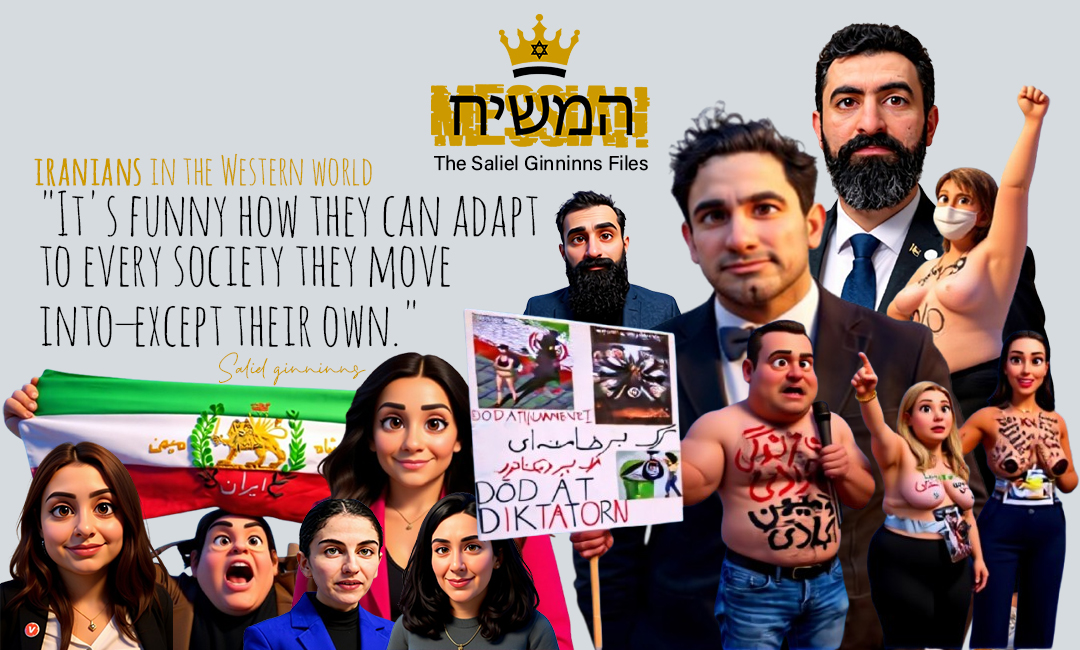
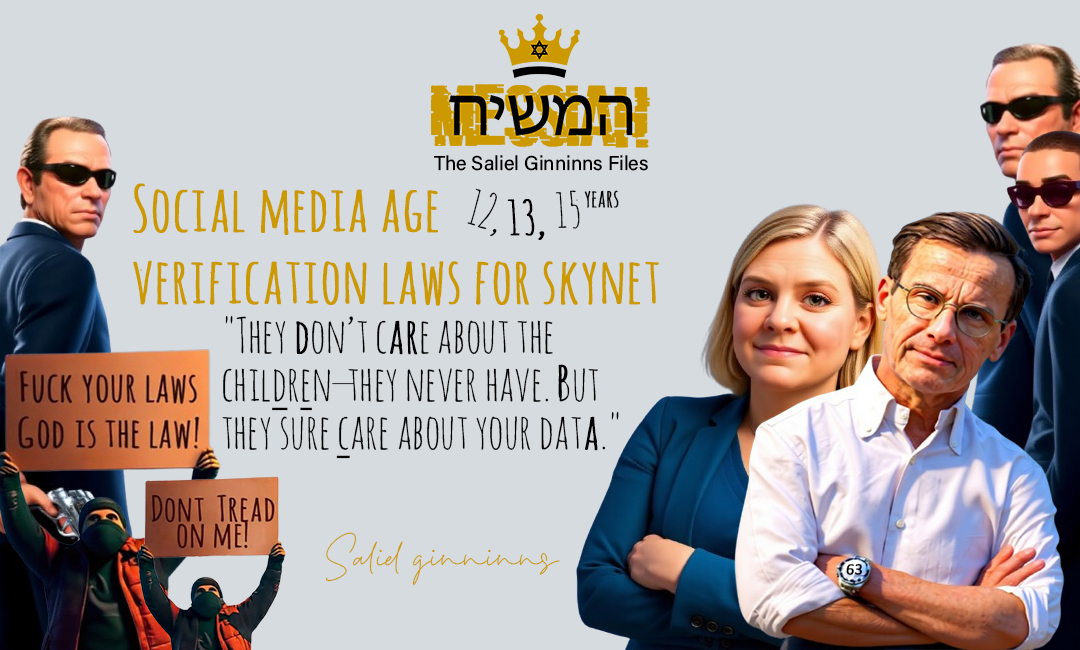
"Protecting children? Please. Controlling adults with ID requests sounds more accurate."
All social media platforms present themselves as safe and responsible, claiming they want to protect minors. In reality, this is just a pretext to collect highly sensitive user information. They ask for ID cards, passports, credit cards, email addresses, phone numbers, and home addresses—information that can be misused or sold to third parties. Complying with their demands legitimizes their operation and turns you into a product in their business model.
Leaders, politicians and the owners of these platforms constantly spread nonsense and false arguments about age restrictions and safety to manipulate users. It is an industrial spy strategy: the more people who register with real identities, the more valuable their database becomes. Sending copies of your ID or providing your real address is essentially giving away your personal privacy willingly. Skynet is not a fiction anymore; Skynet is a reality.
"The smart technology you are using to read this post is spying on you, it is a secret agent following you day and night, listening to you day and night. Collecting and sending secret data about you day and night". Wake up
There is no reason to trust their promises. Their administration is only interested in your data and profit, not user protection. If they don't back down with their registration requirements, boycott them completely. Stay critical, and think twice before sharing personal information. Your privacy is priceless, and no social media platform is worth compromising it.
View The Picture

View The Picture

This wasn’t a victory. It was a signal!
Some individuals in the Swedish government decided to report my account on social media and have it suspended. Declaration of war accepted, no one will have an account on social media very soon.....…
False reports don’t create power — they expose insecurity. If you believed in your own position, you wouldn’t need to hide behind systems to silence someone else. I lose nothing in this process. The only thing revealed here is how fragile your influence really is. My social media accounts were created a few months ago. It was never my intention to keep them long-
Now that this purpose has been fulfilled, I feel ready to move forward and close this chapter. The accounts were simply a tool—nothing more—and they have now served their role.
The biggest losers in this situation are you and the platforms themselves. They will very soon begin to lose users, along with significant portions of their revenue and advertising base. As trust declines and engagement drops, their influence will weaken, making it increasingly difficult for them to maintain their current position.
Influence does not belong to a platform. It never has. Platforms are simply temporary hosts — interchangeable, replaceable, and entirely dependent on the people who bring them relevance and revenue.
When an account is wrongfully suspended due to false reports or manipulated flagging, it does not diminish the individual behind it. Audiences are not tied to a single platform. They move, adapt, and follow value wherever it goes.
All previous posts, analyses, and statements In Swedish have been compiled into the PDF below. Download it, read it, and see the full scope of what has been said — because the record speaks for itself.
Nothing is hidden. Nothing is lost. Everything is documented.
Read More Here
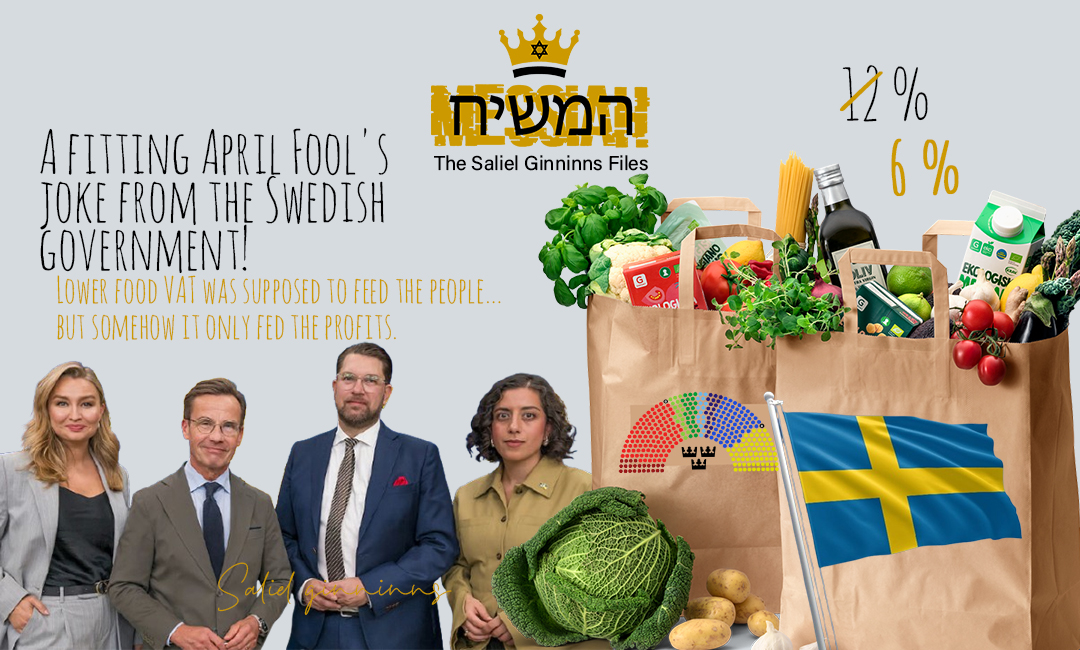
Lower the VAT: because shareholders were struggling to make ends meet.
I have said before that if you want to understand how incompetent, corrupt, short-
The reduced food VAT from 12 % to 6 % is presented as a measure for the people, but in practice it only benefits the companies as they refused to lower prices. There is an imminent risk that prices will soon be adjusted upwards in silence, which means that both the state and citizens lose tax revenue -
#VeryStupid
View The Picture
A Social Psychological Description of Overadaptation, Identity Distancing, and Group Internalization.
The “Iranian Syndrome” can be described as a psychosocial phenomenon in which an individual, upon entering a new social or cultural group, exhibits excessive adaptation to the group’s norms, values, and attitudes. This adaptation may include:
- Devaluation or distancing from one’s own background
- Overidentification with the new group
- Internalization of the group’s negative attitudes toward others, including one’s group of origin
The phenomenon can be understood as an extreme form of social conformity combined with identity insecurity.
When Adaptation Goes Too Far – A Conversation We Avoid
We often talk about integration as something positive. And at its core, it is. When people find their place in a new environment, learn new norms, and build bridges between cultures, it strengthens both the individual and society.
But what happens when adaptation goes too far?
There is a phenomenon few people are willing to put into words. When a person doesn’t just adapt to a new group—but begins to distance themselves from who they are. From their background, their roots, sometimes even from people who remind them of where they come from.
It often starts subtly. You want to fit in. You want to be accepted. You learn the language, the codes, the behaviors. Completely natural.
But sometimes, something shifts.
Suddenly, it’s no longer enough to belong. You feel the need to prove that you belong. You start overperforming your loyalty. Laughing a little louder. Agreeing a little faster. Distancing yourself a little more clearly.
And in some cases—turning away from your own background.
This can mean downplaying your culture, minimizing your roots, or actively distancing yourself from people who share your history. Not always because you truly feel that way—but because it feels like the price of acceptance.
This is not strength. It is often insecurity.
Human beings have a deep need to belong. Rejection can feel like a threat to one’s entire identity. And in that fear, people may go further than they ever intended.
We see it in different contexts:
When someone overadapts to a new group of friends.
When someone starts mirroring opinions that aren’t really their own.
When someone feels they must reject a part of themselves just to be included.
The problem is—we rarely talk about it.
Instead, we celebrate adaptation without asking: at what cost?
Growth, change, and openness to new perspectives are part of life. But it should never require denying who you are. A strong identity is not built by erasing your past—but by being able to carry multiple parts of yourself at once.
Maybe it’s time to nuance the conversation.
Integration should not be about erasing who you are.
It should be about adding—not subtracting.
And sometimes, the strongest form of adaptation is not becoming like everyone else—but having the courage to remain yourself, even when it’s uncomfortable.
#IranianSyndrome
View The Picture

Listen to Song

They say third time’s the charm… but I think you should try the return policy on this one.
Link:
https://open.spotify.com/track/6ZOSOeJi0C6FAOUVn1YD6Q
#I-

No, This Is Not a Joke
What do you have to lose by reaching out? In every sincere word, every open hand, there is a chance for understanding, a spark of peace. Faith calls us not to fear the unknown, but to embrace it with humility, compassion, and courage. To listen, to connect, to engage—these are gifts we give, not just to others, but to our own hearts.
Recently, we sent a letter along with an invitation to a wide range of recipients, including members of the media, academics, religious leaders, political figures, and diplomats. Some have wondered whether this is a joke or a scam. The answer is simple: no, it is not.
We understand that receiving such a message can feel unexpected. But the purpose of the letter is clear: to share important information and extend an invitation to an important event we believe is relevant and valuable to the recipients.
This is not a joke, nor an attempt to mislead anyone. On the contrary, our aim is to engage serious, respected individuals who can contribute to meaningful dialogue in society.
We appreciate your attention and look forward to a positive response from those who received the invitation. Should there be any questions or a need for clarification, you are always welcome to contact us directly.
Every sincere effort to connect with another soul is a gift; what do we truly lose by offering it?
View The Picture
I warned them, not once, not twice, but enough times that silence became a choice. And when silence becomes policy, collapse is no longer a possibility—it is a timeline.
I am so fucking angry. I have been trying to warn all these incompetent, irresponsible, and shameless people about many things since 2025. I have repeatedly raised the same issues— the conflicts, the wars, the risks, the discrepancies, the things that do not add up. Every single time, I have been ignored. Not just ignored, but actively dismissed.
They did not take it seriously. They laughed. They joked about it in meetings, as if what I was saying was exaggeration or paranoia.
And it does not stop there. Some of them took the information I shared—confidential information—and passed it on to family and friends. We both know what that means. So-
Today I learned something that changes everything. It will be far worse than I ever imagined.
What is coming cannot be hidden. And when it happens, they will do what they always do—talk their way out of it, shift the blame, rewrite the narrative.
They must be held accountable for the crises that are now inevitable.
Do not buy their lies. Do not buy their arguments, their excuses, or their explanations.
Everyone has been warned. Even those at the local offices. No exceptions were made. No one can claim they did not know.
But that does not matter to them. It never has. They do not care about the consequences, and they certainly do not care about you.
Sometimes I wonder if this is even a country anymore. It feels more like a cult—a closed circle that protects itself and its own interests, no matter the cost to everyone else.
View The Picture

Corruption builds the fall. Greed deepens it. Lies seal it. And still—some will rise, untouched by the disease that claimed the rest.
It will be on an international level.
View The Picture

View The Picture
Nine said: “It’s nothing.”
One said: “It might be.”
They laughed at the warning—
but missed what they couldn’t see.
Be the one who dares to see…….

It is a sorrowful thing to witness those who profess to serve the divine, only to reveal hearts filled with lies, hypocrisy, and betrayal. The disappointment runs deep, for it is not only a violation of trust but a betrayal of the very principles you are meant to uphold. Yet, I trust in God’s wisdom and mercy, knowing that in time, truth will emerge, and justice will be served. May you find the strength to seek forgiveness and realign your actions with the righteousness you were once called to embrace.
I took the time to send a kind and respectful invitation to the Jewish, Christian and Muslim religious leaders around the world, but unfortunately, I was met with a response marked by disrespect and false accusations. I regret that you chose to respond in this manner and did not show the respect that such an invitation deserved.
That being said, I would like to inform you that no further invitations will be sent to those responsible in the future. I also believe it would be inappropriate for you to participate in any religious gatherings that I am a part of going forward.
I hope you reflect on your actions and seek the truth in your hearts. Lies, hypocrisy, and false claims have consequences, both for the individual and for society as a whole. I encourage you to return to God in humility and seek forgiveness for these actions.
May God guide you on the right path and give you the strength to do what is right and true. I wish you all the opportunity for change and improvement.
I would also like to clarify that, based on the current circumstances in the country and around the world, there will be no continued interest or budget to support your operations. Therefore, it is highly likely that your operations will be shut down in the future, which, unfortunately, may lead to many of you losing their jobs. This is a consequence of the lack of engagement and cooperation on your part, and I see no way forward under the current circumstances.
View The Picture

View The Picture
The path of guidance was laid before them, the signs were clear, and the warnings repeated. Yet pride and mockery led them astray. Now the weight of what they scorned shall be upon them, and justice, firm and unyielding, will make them taste the bitter truth of their own disbelief.
O God, I have called my people, day and night, with steadfast devotion. Yet my words and warnings only drove them further into ignorance and mockery.
Whenever I beckoned them to You and Your guidance, they covered their ears, laughed scornfully, spoke with disdain, persisted in their denial, and acted with proud arrogance.
I called to them openly, I admonished them in private, I pleaded with them with sincerity and patience.
Still, they rejected the truth and turned away from the path of righteousness.
O God, let Your punishment descend upon them—a rain of humiliation, curses, crises, conflicts, poverty, and division—so that they may taste the reality of what they were repeatedly warned about. Let them face the consequences with no delay, and let Your justice be swift and unwavering.
View The Picture

View The Picture

Here I stand—a sign of what’s coming, a reminder that time is no longer on your side
The day draws near—I feel its call,
A quiet shift beneath it all.
The clock keeps ticking, thin and tight,
There isn’t much between now and night.
No trumpet sounds, no sudden cry,
Just seconds slipping, passing by.
I am a sign they said would rise,
A shadow flickering in their eyes.
No time remains to turn away—
The end is closer than they say.
View The Picture

View The Picture

Algorithms may judge, but courage speaks louder than code.
A few days ago, a left-
In a previous recording, I told the story of the word “Nigger” and explained that we are all God’s Niggers, regardless of whether we are black niggers, brown niggers, white niggers, yellow niggers, blue niggers or rainbow niggers. We are all God’s niggers, regardless of skin color, background, ethnicity, nationality or sexuality.
I also explained that the meaning of the word “Nigger” has changed and that it was replaced that day with “God’s servant.” You can go back to that recording if you want to hear the full story of why the meaning of the word changed.
In the TikTok post, I wrote that soon people would start celebrating a new holiday due to the difficult economic situation in the country and the world, and I named it “Broke Nigger Day.” I ended the post with: “Happy Broke Nigger Day Everyone.”
#Happy-
View The Picture